Why Does My TV Antenna Work Better at Night? (2026 Update)
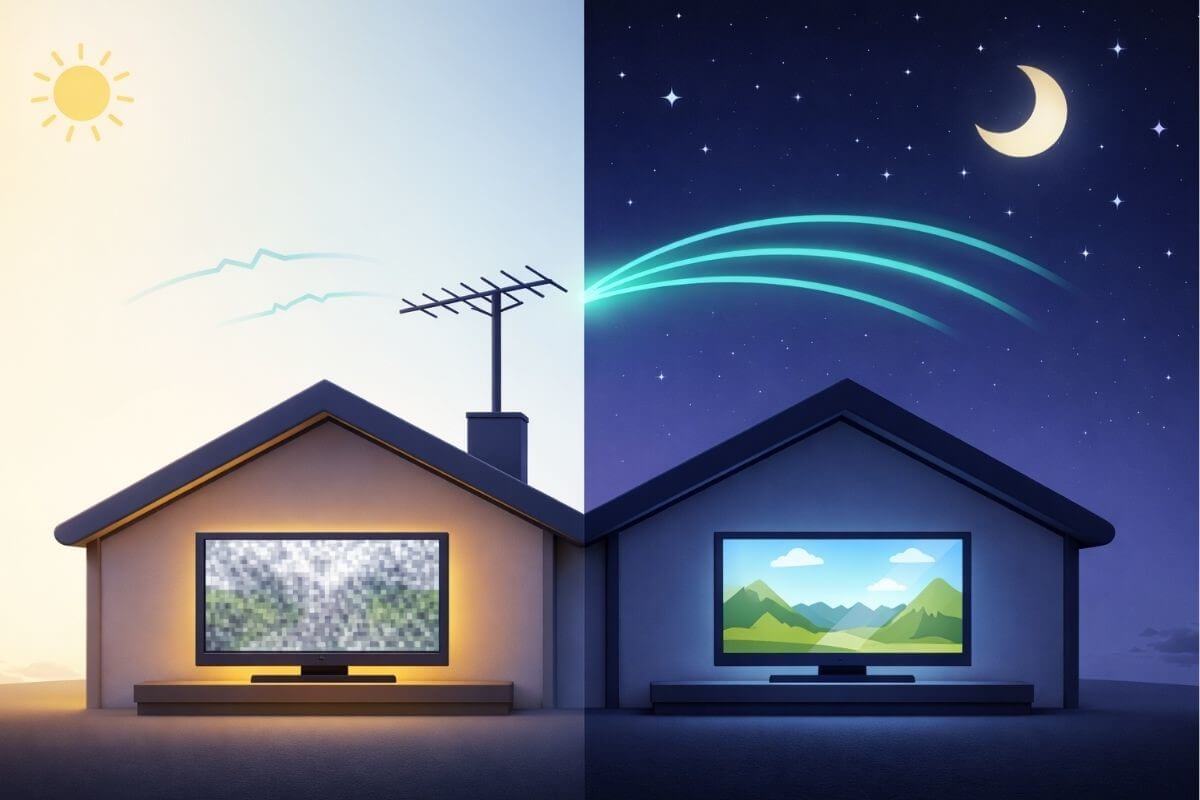
If your TV antenna works great at night but struggles during the day, you are not imagining it — and your antenna is not broken.
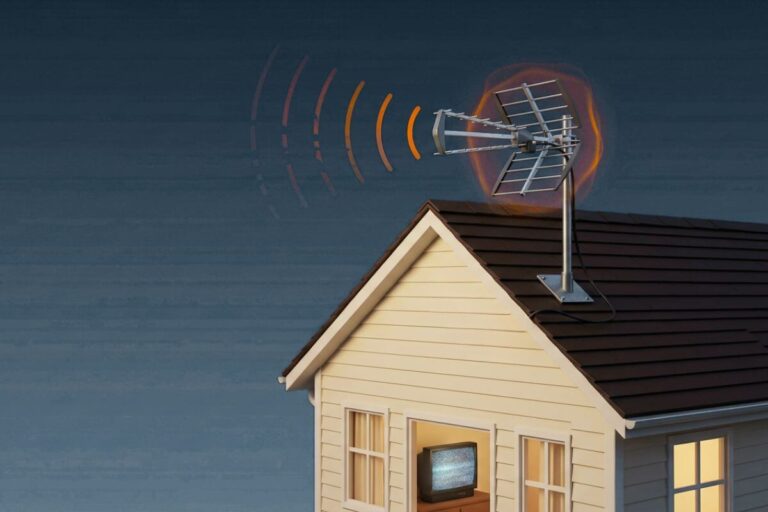
What you are seeing is usually a borderline signal that becomes strong enough after dark. As the air cools, layers of warmer and cooler air can sometimes bend TV signals and carry them slightly farther. Changes in local electrical interference may also affect a weak signal.
This guide explains exactly why it happens and shows you five simple fixes that can make your signal steady all day long.
Fast Answer
- Works better at night → your signal is weak
- Daytime interference reduces signal strength
- Fix it → reposition, raise, and aim your antenna
Why Does My TV Antenna Work Better at Night?
TV antennas often work better at night because the air changes after the sun goes down. Cooler air helps TV signals travel farther and more clearly.
There is also less interference at night. During the day, phones, cars, and other electronics can weaken the signal. At night, things are quieter, so the signal comes through better.
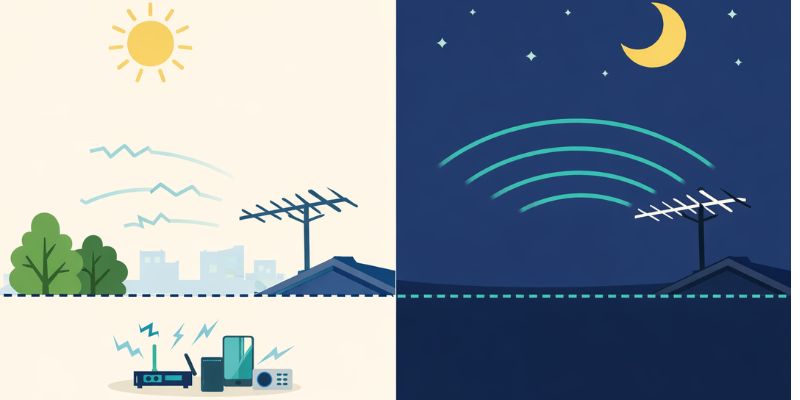
Sometimes, the air even helps bend the signal so it can reach your antenna more easily. That’s why a weak channel during the day may look clear at night.
But this doesn’t mean your antenna suddenly got better. It usually means your signal is just barely strong enough. At night, it improves just enough to work.
I’ve seen this happen in real setups—channels that disappear during the day but come in clearly at night once the signal improves slightly.
If this is happening, your setup likely needs a small boost. This guide shows how to strengthen your TV antenna signal with simple fixes.
If your channels come and go, this walkthrough explains what causes antennas to lose signal and how to spot the problem.
Your antenna notes and quick fixes, all in one place.
Get the Free TV Antenna Troubleshooting Checklist
A 4-page fill-in guide to keep near your TV.
Fill it in once. Use it when a channel disappears, the picture breaks up, or you need to fix your antenna again.
- Write down your must-have channels, tower direction, and antenna setup
- Follow the quick fixes when a channel goes missing or the picture freezes
- Find and record your best antenna spot so you do not have to start over
- Know when to rescan — and when not to rescan
- Keep the questions to ask an antenna pro before paying for new parts

Hi, I’m Kathy — I’ve helped thousands of readers ditch cable and get their local channels working for good.
What It Means If Your Antenna Only Works at Night
If your channels only come in clearly after dark, your signal is right on the edge during the day. It’s just strong enough at night, but not strong enough to stay steady when conditions change.
Something is weakening the signal during the day—like distance, trees, walls, or interference from nearby devices. When night comes, the signal improves just enough to work again.
If your channels disappear or come and go, this explains what causes TV antennas to lose signal and how to spot the pattern.

Is your signal not reliable during the day? You can watch classic TV free without cable anytime using streaming apps.
5 Ways to Improve Your Daytime Antenna Signal
If your antenna works better at night, you don’t need a new setup—you need small adjustments that make your signal stronger during the day.
1. Reposition your antenna
Move it closer to a window or higher on the wall. Even a few feet can make a big difference.
2. Raise the height
Higher is almost always better. Try placing it above furniture or near the top of a window.
3. Aim it more precisely
Direction matters. Turn the antenna slowly and test channels as you go.
You can follow these steps to aim your indoor antenna for the strongest signal without guesswork.
4. Reduce interference
Keep the antenna away from Wi-Fi routers, metal objects, and thick walls that block signals.
5. Test before rescanning
After moving or aiming the antenna, check the problem channel first. If it is already saved, improved reception should appear immediately. Run a channel rescan only if the missing channel does not return or a local station has changed frequency.
Quick Test to Confirm the Problem
You can tell in a few minutes if this is a weak signal issue.
Try this simple test:
- Check your channels during the day and again at night
- Move the antenna a few feet (try a window or higher spot)
- Turn the antenna slightly and test again
If channels improve at night or change when you move the antenna, your signal is borderline—not gone.
Check the problem channel after each adjustment. Rescan only if the channel is missing from your TV’s channel list.
If your channels come and go, here’s how to rescan your TV antenna channels the right way.
Do You Need a Better Antenna?
If your antenna only works well at night—even after you’ve moved it, raised it, and aimed it carefully—it may not be strong enough for your location.
This usually happens if you’re:
- Far from broadcast towers
- Surrounded by trees or buildings
- Using a small indoor antenna in a weak signal area
In these cases, the issue isn’t setup—it’s signal strength limits.
Upgrading to a stronger antenna, or switching from indoor to outdoor, can make your signal more stable during the day.
Frequently Asked Questions
Why is my antenna signal stronger at night?
TV signals can travel farther at night because of cooler air and less interference. This can make weak channels come in more clearly after sunset.
Why do my TV channels disappear during the day?
This usually means your signal is borderline. During the day, interference or obstacles weaken it just enough that channels drop out.
If your channels keep disappearing, here’s what causes antenna signal loss and how to fix it.
Do I need a signal booster if my antenna works better at night?
Maybe. If your signal is weak, a booster can help—but only if used correctly. In some cases, placement and aiming matter more than adding equipment.
Why does my antenna work in one spot but not another?
Small position changes can affect signal strength. Walls, windows, and nearby objects can block or reflect signals.
You can improve results by learning how to aim your antenna for the strongest signal.
Should I rescan my channels after moving my antenna?
Check the missing or weak channel first. If it is already saved, moving the antenna can improve reception immediately. Rescan only if the channel is absent from your channel list or a station has changed frequency.
Here’s how to rescan your TV antenna channels the right way.
Wrap-Up
If your TV antenna works better at night, the problem isn’t random—it’s a weak or borderline signal during the day. Nighttime conditions simply make it strong enough to work.
That’s why you may notice your antenna signal stronger at night, or your TV antenna signal fluctuates depending on the time of day. It’s all part of the same issue: your setup is close—but not quite strong enough yet.
The good news is you can usually fix it. Small changes to position, height, and direction can turn a weak daytime signal into one that works all day.
If your channels come and go with an antenna, or your antenna isn’t picking up local channels consistently, focus on strengthening the signal—not replacing everything right away.
Once your setup is dialed in, your antenna should work just as reliably during the day as it does at night. For more help, see my TV Antennas & Free Channels guide.