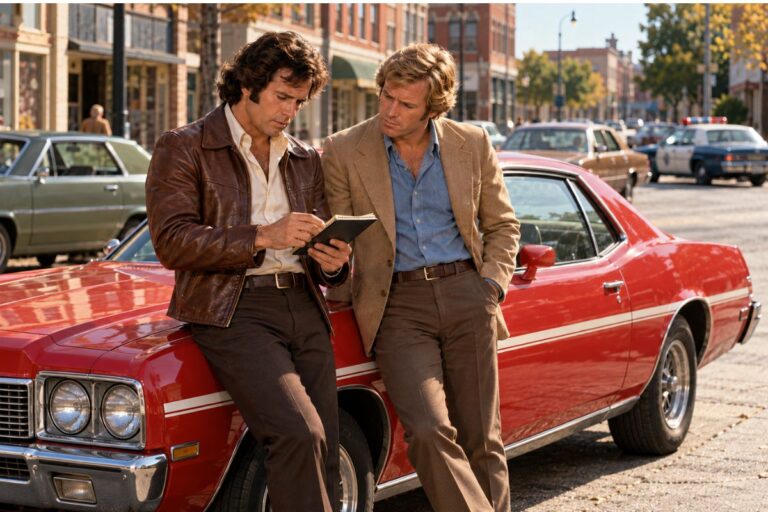
What Andy Taylor Knew About Being a Good Neighbor (And Why We Need Mayberry More Than Ever)
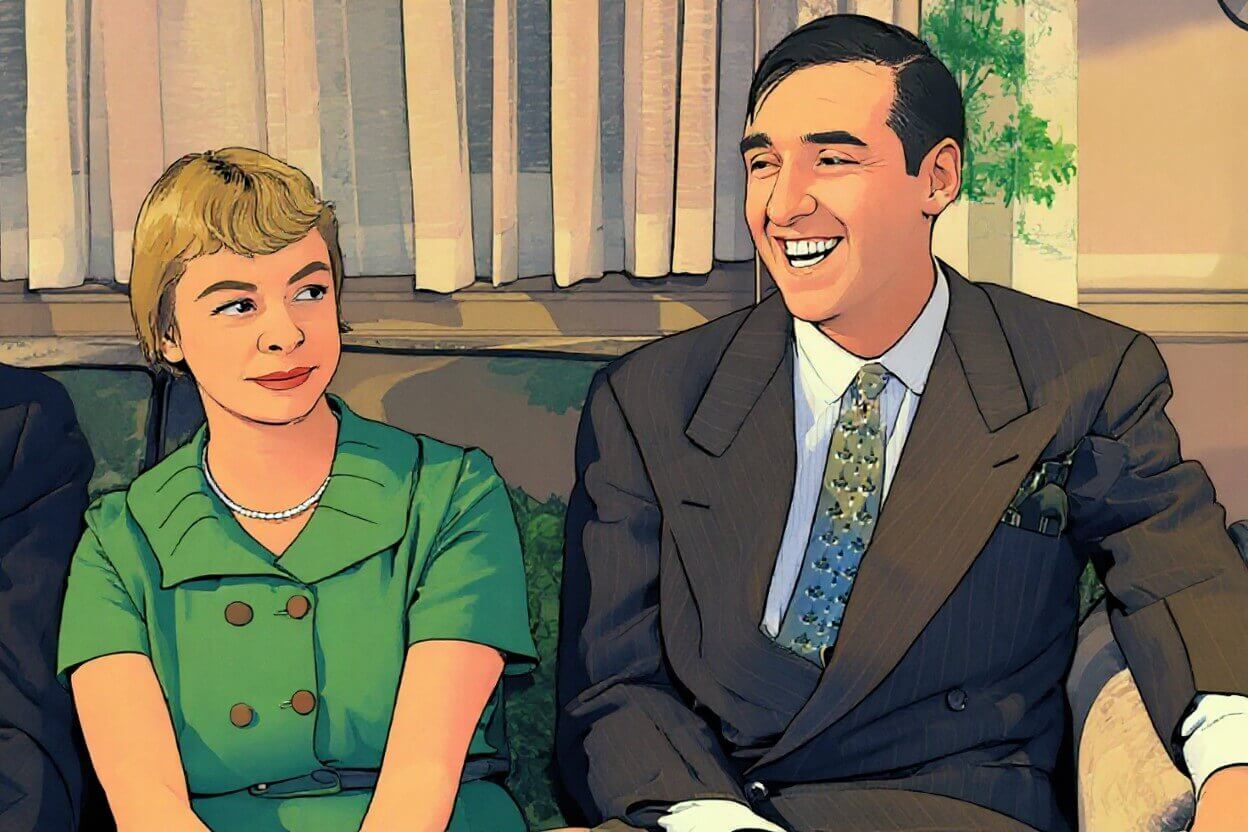
I was fourteen years old when I first saw Gomer Pyle ask a girl to dance.
I was at that age where you’re already wondering — maybe a little too early — whether anyone is ever going to find you attractive. Whether you’re the kind of girl a boy notices. I wasn’t sure the answer was yes.
And then there was Gomer. Sweet, bumbling, completely sincere Gomer — who realized mid-evening that he’d forgotten to bring his date flowers, slipped out without explanation, and came back with a bouquet and an apology so genuine that Mary Grace Gossage forgot to be annoyed.
While the rest of the group was out searching for him, irritated and confused, Gomer and Mary Grace were back at Thelma Lou’s, dancing by themselves, having the best time of anyone that evening.
When Andy, Barney, Thelma Lou and Helen came back and heard the music — they didn’t say a word. They just stood there and smiled. Because what they were seeing was two people who had found something in each other that nobody else could quite see. And that was enough.
I have never forgotten that episode. Not because it’s the most dramatic thing Andy Griffith ever did. But because at fourteen, sitting in my living room, it told me something I needed to hear: that being seen by the right person had nothing to do with being the most polished one in the room.
Gomer Pyle taught me that. On a Tuesday night in the late 1960s.
The episode is called ‘A Date for Gomer’ — Season 4, Episode 9, aired November 25, 1963.
Mayberry Wasn’t a Simple Place. It Was a Chosen One.
People dismiss The Andy Griffith Show sometimes by saying “well, it was a simpler time.” I understand why they say it. But I was alive during that time, and I want to gently push back.
The Andy Griffith Show debuted in 1960 — the same year John F. Kennedy was elected president, the same year the civil rights movement was accelerating across the South, the same year American families were quietly learning what a fallout shelter was. The Cuban Missile Crisis was two years away. Nobody was living through an uncomplicated era.
Mayberry wasn’t a reflection of how easy life was. It was a decision about what kind of people we wanted to see on television. About what values were worth putting in front of families every Tuesday night.
That decision was made deliberately. And it’s worth taking seriously.
What Andy Actually Did — Week After Week
Andy Taylor never gave a speech about his values. He just lived them, quietly, in front of everyone.
He never humiliated Barney even when Barney was spectacularly wrong — and Barney was spectacularly wrong on a regular basis. Instead Andy would let Barney reach his own conclusions, nudge him gently in the right direction, and make sure Barney got to keep his dignity at the end. Every time.

He let people save face. That’s a lost art. The instinct now — on television, online, in public life — is to press the advantage when someone stumbles. Andy Taylor never pressed the advantage. He’d find a way to let the other person exit the situation with their head up. It cost him nothing and it meant everything to the person on the receiving end.
He solved problems by listening first. Not planning his rebuttal while the other person was still talking. Actually listening. Then asking one quiet question that usually cut straight to the heart of things.
And the Gomer episode captures something else entirely — something about romance and human connection that most television doesn’t trust itself to say. That two people can find each other genuinely wonderful for reasons nobody else can fully see or explain. That sincerity is more attractive than sophistication. That showing up with flowers, even late, even after you already embarrassed yourself, is the right thing to do.
The rest of the group came home expecting to be annoyed. Instead they found joy. And they were wise enough to just stand there and appreciate it.
Why This Feels So Rare Now
I’m not going to pretend the world was perfect then. It wasn’t. But somewhere along the way we seem to have decided that strength means loudness. That winning means making the other person look small. That patience is weakness and that sincerity is something to be embarrassed about.
Andy Taylor would have found all of that genuinely puzzling.
He was the sheriff. He had authority. He had a gun — famously, one bullet, kept in his shirt pocket rather than the chamber. He didn’t need to perform toughness because he was actually secure. That’s the thing about truly confident people. They don’t need to dominate every room they walk into.
We see that so rarely now that when we watch Andy Griffith reruns, it almost feels like a foreign language. A way of being that we’ve half-forgotten was ever possible.
The Comfort Isn’t the Nostalgia. It’s the Reminder.
Here’s what I’ve come to believe after watching these shows again as an adult: The reason people feel genuinely better after an episode of Andy Griffith has nothing to do with wishing it was 1962.
It’s because the show reminds you that the way Andy treated people is still available. It’s still a choice anyone can make, any day, in any era. You can still let someone save face. You can still listen before you speak. You can still show up with flowers, even late.
That’s not escapism. That’s instruction.
And sometimes, when the news is too loud and the world feels like it’s moving too fast, sitting down with Andy and Barney and Gomer for forty-eight minutes isn’t running away from anything.
It’s remembering what you actually believe.
How to Watch It Tonight
If this made you want to go find that Gomer episode right now — I don’t blame you. You can watch The Andy Griffith Show free, without a subscription, starting tonight.
???? Where to Watch The Andy Griffith Show Free
???? The 9 Best Andy Griffith Episodes to Watch First
???? Where to Watch Old TV Shows for Free — Complete Guide
If you watched this episode when it first aired, I’d love to know what you remember. Leave a comment below.