About The Keen Guide
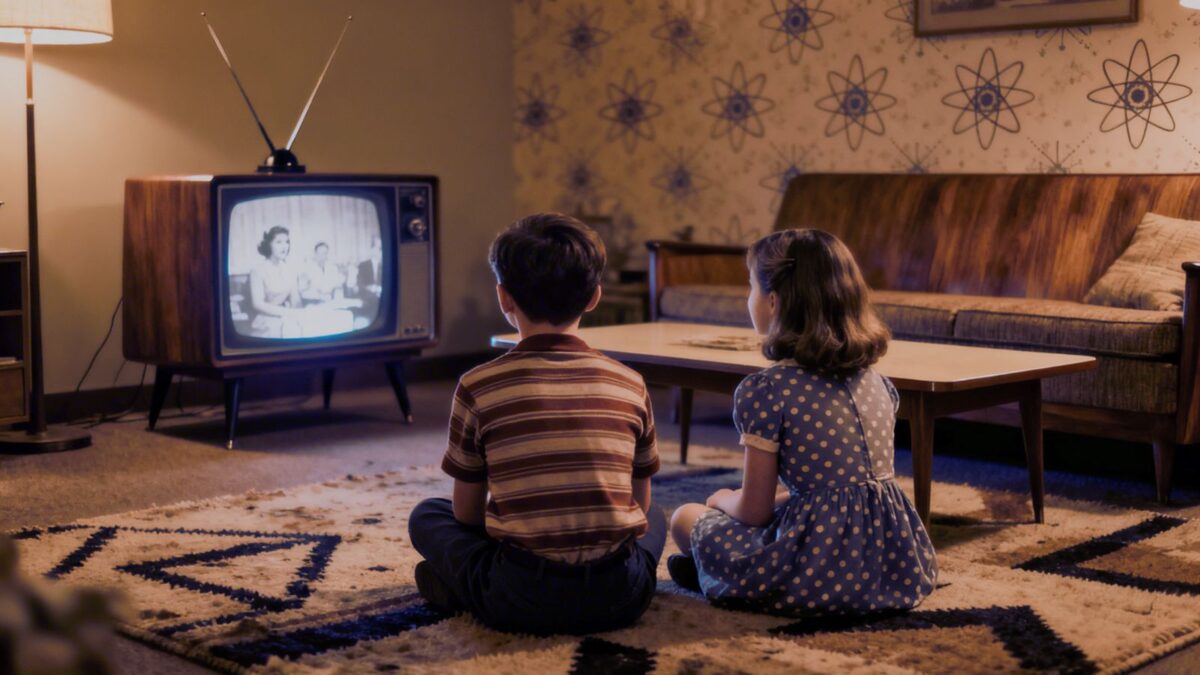
Scenes like this remind me of how my brother and I spent countless evenings — cross‑legged on the floor, completely absorbed in whatever classic show happened to be on.
Hi, I’m Kathy — and I didn’t grow up with technology.
I grew up in the 1950s, when televisions were pieces of furniture, not gadgets. Ours sat in the corner of the living room, humming softly as the tubes warmed up. My brother and I would sit cross‑legged on the floor, staring up at that glowing black‑and‑white screen like it was a window into another world.
We didn’t know anything about “reception” or “signal strength.” We just knew that if we held the rabbit ears a certain way, the picture might stop rolling long enough for us to laugh at the joke we didn’t want to miss.
Those moments were simple and steady — the kind of memories that stay tucked in your heart for a lifetime.
A Memory That Never Left Me
I can still picture the hum of the TV tubes warming up, the glow of the screen, and the way the whole room seemed to pause when a favorite show came on. Those evenings with my brother — simple, steady, full of laughter — are the heart of why I love classic TV.
How This All Started
During COVID, when the world felt uncertain and the days felt long, I found myself craving that old sense of comfort. I wanted to watch the shows that had shaped my childhood — the ones that made me feel safe, steady, and connected.
I thought it would be simple.
It wasn’t.
I didn’t grow up with apps or menus or settings. I didn’t know what a streaming device was. I didn’t understand why one show was on one service and not another. And every time I thought I was getting the hang of it, something else would pop up on the screen that made no sense at all.
I made mistakes. I got stuck. I got frustrated. And slowly — one wrong button at a time — I figured it out.
There were days I unplugged everything and walked away. There were nights I sat on the couch thinking, “Maybe this just isn’t for me.” Sometimes I felt embarrassed, like I was the only one who didn’t understand what everyone else seemed to know.
But the shows meant too much to give up on.
And the first time I finally got one of my childhood favorites to play, it felt like stepping back into my living room in 1958. I didn’t just watch the show — I felt like I’d found a piece of myself again.
Why I Created The Keen Guide
Somewhere along the way, I realized something important: If I struggled this much, other people probably were too. And not because we’re “bad with technology,” but because we didn’t grow up with it. We grew up with knobs, not menus. With antennas, not apps. With patience, not passwords.
I wanted a place where people like us could feel understood — not judged, not rushed, not talked down to. A place where you don’t have to pretend you know what a “firmware update” is or why your TV suddenly wants you to sign in again.
So I created TheKeenGuide.com as a place where everything is explained slowly, clearly, and kindly. A place where beginners feel welcome. A place built on real experience, not tech jargon.
This isn’t a tech site. It’s a human site. I test these steps on real TVs, antennas, and streaming devices at home.
It’s my journey, shared openly, so you don’t have to go through the same confusion I did.
Why This Matters
When I finally got one of my childhood shows to play again — after all the wrong buttons, the confusion, the frustration — it felt like coming home. That feeling of comfort and familiarity is what I want to help you find too.
What You’ll Find Here
I write about how I found specific classic TV shows, the steps I took to get them working, and the devices and apps that actually made sense to me. I include screenshots so you can see exactly what I saw, and I share the tips I wish someone had told me.
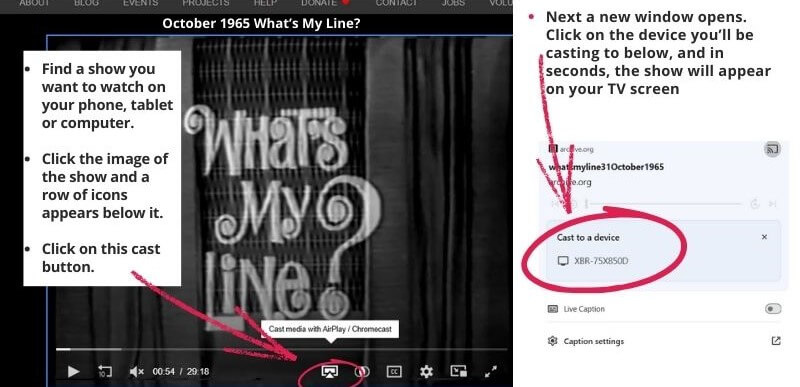
My goal is simple: Help you watch what you love without paying for things you don’t want or buying gear you don’t need.
If you just want the steps — and you want them to work — you’re in the right place.
How I Research and Recommend
II write the way I wish someone had written for me: slowly, clearly, and without assuming I already know the vocabulary.
I don’t just repeat what companies say. I start with official documentation, then I test steps on real TVs and streaming devices when I can — the same way you’d do it at home. When I can test something myself, I do, especially setup steps and common “stuck points.”
I look for repeated patterns in real‑world user reports, not one‑off opinions. I ignore outliers and focus on consistency: confusing menus, weak reception, dropped connections, or sound cutting out. And when products are involved, I prioritize options that are easy to set up, stable, and better for hearing voices clearly.
If something is a hassle, I’ll say so. And if a free fix works first, I’ll show that before recommending anything you have to buy.
My Promise
I am not a repair technician. I research common TV problems and turn the most likely fixes into clear steps beginners can follow.
I will never talk down to you or push you to buy something you may not need. I start with free fixes, check official instructions, and explain what to try next.
I also update my guides when apps, settings, or steps change. If I do not believe I can give you useful direction, I will tell you and refund your payment.
Start with These Three Guides
I’m not here to dazzle you with technology. I’m here to help you press the right buttons and watch your show. If you’re new to streaming (or just want the simplest path), begin with:
Welcome to The Keen Guide. Let’s find your favorites together.
Cheers,
Kathy