Indoor vs Outdoor TV Antennas for Rural Areas: Which is Better?
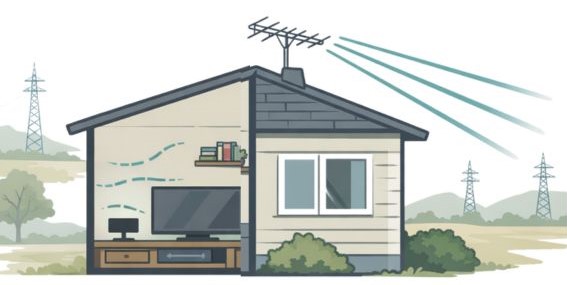
Indoor antennas can work in some rural homes, but they are not the safest choice when you are far from towers, surrounded by trees, or dealing with weak reception.
The real decision is not indoor vs outdoor by price. It is whether your signal path is strong enough for an indoor antenna to work reliably.
Use this guide to decide when indoor is worth trying, when attic or outdoor is the smarter move, and when to stop buying “stronger” indoor antennas that still may not fix the problem.
Fast Fix: Simple Decision Rule (Rural)
If indoor fails after 2–3 full rescans in your best spot: don’t keep buying “stronger” indoor antennas or boosters. The next upgrade that actually changes results is moving the antenna location (attic/outdoor), not swapping models.
Want reliable ABC/CBS/NBC/FOX/PBS? Start with attic or outdoor. Rural reception usually needs height + fewer walls/trees in the way.
Indoor is worth trying only if you can place it on an outside wall/window and you’re not surrounded by heavy trees/hills or a signal-blocking house (brick/metal/foil insulation).
If you are not sure what signal you should get at your address, use this guide to choose the best TV antenna for your area.
Indoor TV Antennas: What They Can (and Can’t) Do
Indoor TV antennas work best when you live fairly close to local broadcast towers. In cities and many suburbs, that’s often true — which is why indoor antennas can perform well there. In rural areas, the conditions are usually the opposite.
In most real homes, an indoor antenna is reliably “short-range,” typically working best within about 10 to 30 miles of the nearest towers. To see how far away your towers are, use the free signal maps at RabbitEars.info.
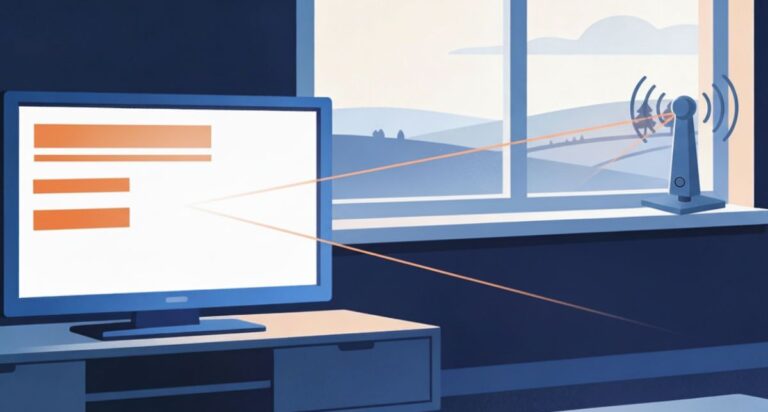
Distance isn’t the only problem. Indoor antennas also start at a disadvantage because the TV signal has to pass through your home first — exterior walls, insulation, windows, and sometimes roofing materials — which can weaken the signal before it even reaches the antenna.
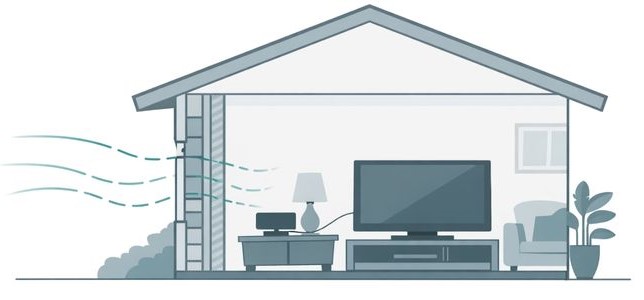
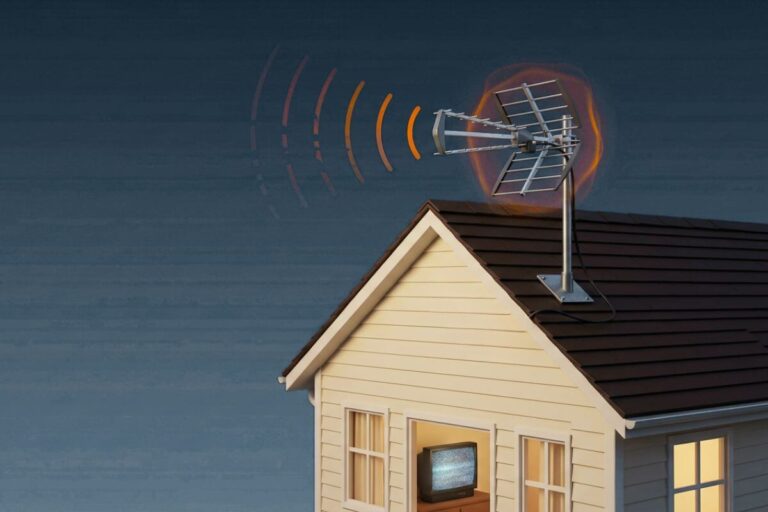
That’s why rural households often see the same pattern: fewer channels, channels that disappear randomly, or reception that only works at certain times of day.
If you’re trying to figure out whether an indoor antenna can work at your address, the deciding factor is almost always tower distance (and what’s between you and the towers) — not the “range” printed on the box.
If indoor reception has been inconsistent in your home, that’s usually the same set of issues explained in our guide to why indoor TV antennas fail in rural areas.
Bottom line: Indoor antennas are convenient and inexpensive, but they’re best treated as a short-range option. In many rural homes, an outdoor antenna is the only reliable fix.
If you are not sure whether indoor reception is realistic at your location, see how far an indoor TV antenna can reach before choosing between indoor and outdoor.
Outdoor TV Antennas: Why They Perform Better in Rural Areas
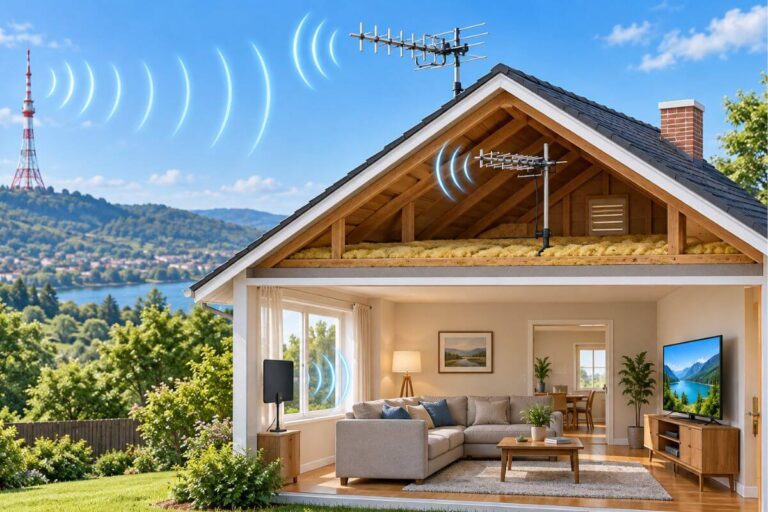
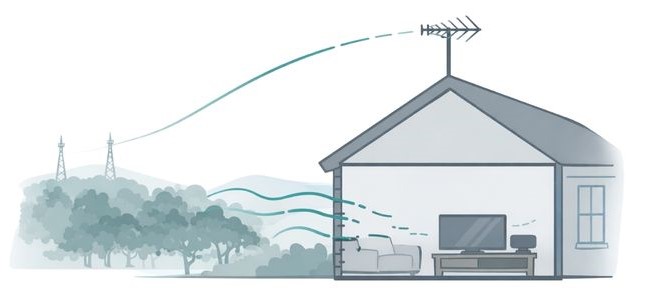
Outdoor TV antennas usually work better in rural areas because they can capture the signal before your house and nearby obstacles weaken it. When an antenna is mounted outside (and higher up), it has a clearer path to the broadcast towers—so the signal starts stronger and stays more stable.
When it comes to getting good reception in a rural area:
1) Height beats “power”
In rural areas, height often matters more than any built-in amplification. Getting the antenna above rooflines, tree cover, and small terrain dips can turn an unreliable signal into a usable one.
2) A clearer path means steadier reception
A “cleaner” signal path is often the difference between channels that come and go and channels that stay locked in. Outdoor placement reduces the amount of signal that has to fight through walls, insulation, and nearby obstructions—especially for stations near the edge of reception.
3) They’re built for real long-distance reception
Outdoor antennas are designed for situations like 30 to 70+ miles from broadcast towers (sometimes farther with ideal terrain and enough height). Indoor antennas usually struggle once you’re well outside town, no matter what the box claims.
What “outdoor” can mean
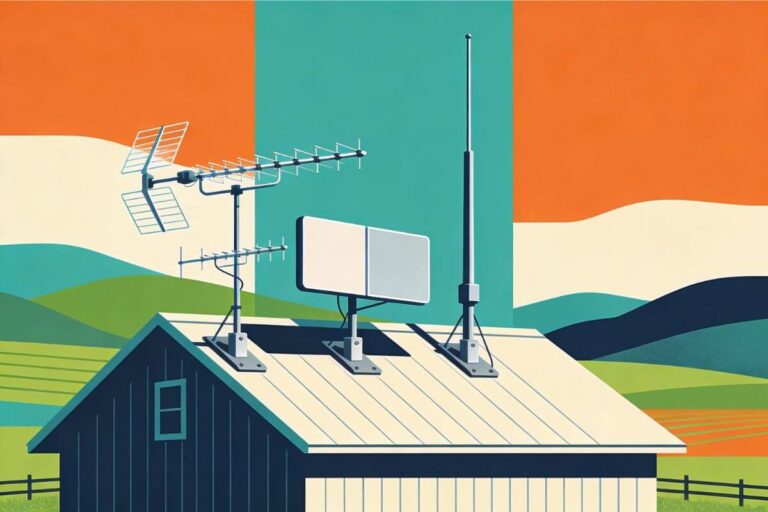
- Rooftop: strongest option for rural reception
- Pole-mounted: often best when trees or terrain are the main problem
- Attic-mounted: a middle option—higher than indoors, protected from weather, but still partially blocked
Simple rule: If you’re truly rural, an outdoor antenna is usually the only option that works consistently.
If your rooftop antenna works sometimes but drops channels during certain conditions, these reasons outdoor TV antennas lose signal can help explain what’s happening.
Your antenna notes and quick fixes, all in one place.
Get the Free TV Antenna Troubleshooting Checklist
A 4-page fill-in guide to keep near your TV.
Fill it in once. Use it when a channel disappears, the picture breaks up, or you need to fix your antenna again.
- Write down your must-have channels, tower direction, and antenna setup
- Follow the quick fixes when a channel goes missing or the picture freezes
- Find and record your best antenna spot so you do not have to start over
- Know when to rescan — and when not to rescan
- Keep the questions to ask an antenna pro before paying for new parts

Hi, I’m Kathy — I’ve helped thousands of readers ditch cable and get their local channels working for good.
Indoor vs Outdoor TV Antennas: What Really Changes
Distance
- Indoor: reliable only about 10–30 miles in most homes.
- Outdoor: can hold 30–70+ miles much more consistently when mounted high and aimed well.
Obstacles
- Indoor: signal must push through walls, insulation, windows, roofing (plus trees/terrain).
- Outdoor: starts with a cleaner signal outside the house, with fewer building-related losses.
Stability
- Indoor: “works sometimes” — dropouts, pixelation, rescans.
- Outdoor: steadier lock, especially for edge stations.
Rural fit
- Indoor: only works in rural areas if you’re unusually close to towers or have very open terrain.
- Outdoor: usually the realistic rural choice.
Bottom line
Indoor antennas are convenience antennas.
Outdoor antennas are reception antennas.
When an Indoor TV Antenna Might Still Work
Even in rural areas, an indoor antenna can work if all of these are true:
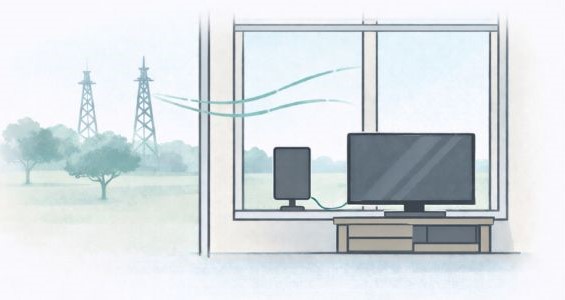
- You’re within 20–25 miles of the main towers
- You can place it in a window facing the towers
- Your home isn’t signal-blocking (no metal siding / foil insulation)
- You only need major networks, not fringe stations
If those don’t apply, expect dropouts, missing channels, and frequent rescans.
If you want a quick rule-of-thumb for distance, start here to learn about indoor antenna range by miles.
When an Outdoor TV Antenna Makes More Sense
A solid outdoor antenna is usually the right call if:
- You’re 30+ miles from towers
- Channels drop in/out or pixelate
- Scans find very few stations
- Reception changes with weather/time of day
- The indoor antenna works only sometimes
If You’re Unsure
Start with distance, then your symptoms:
- Near towers + stable reception → indoor might be enough
- 30+ miles or unstable reception → outdoor is typically required
That’s physics, not user error.
Real-World Example: Why Location Changes Your Strategy (Zip 33418)
To show you how much location matters, let’s look at the data for Zip Code 33418 (Palm Beach Gardens, FL). Even in a flat state like Florida, “rural” pockets create different challenges for your signal.
- The Neighborhood View: Near the center of 33418, my research shows that a high-quality indoor antenna in a south-facing window can usually catch the major West Palm Beach towers (CBS, NBC, FOX).
- The Rural Acreage Shift: However, as you move toward the more wooded, rural acreages further west, the “Line of Sight” to the towers gets blocked by heavy foliage. For a home in these pockets, the data suggests skipping the indoor “stick-on” models. A small Outdoor Multi-Directional Antenna mounted even 10-15 feet high provides the stability needed to keep the signal from dropping during a storm.
The Lesson: Before you buy, I always recommend checking your specific address on RabbitEars. If your favorite classic TV towers are labeled “Fair” or “Poor,” an outdoor mount is almost always the smarter investment for a frustration-free experience.
Frequently Asked Questions
Why does my antenna work at night but not during the day?
TV signals can change throughout the day due to temperature shifts, atmospheric conditions, and electrical interference. In rural areas, weaker signals may only come in reliably at certain times, even when nothing in your setup has changed.
This does not mean your antenna is defective.
Do I need a signal booster for a rural antenna?
A signal booster does not create signal — it only amplifies what’s already there.
If the signal reaching your antenna is weak or unstable, a booster often makes reception worse, not better. Boosters are most helpful only when a strong signal is being split to multiple TVs.
Why does my antenna say 100 miles but I only get a few channels?
The mileage listed on antenna boxes is marketing, not real-world performance.
Actual reception depends on tower distance, terrain, height, and obstacles — not the number printed on the package.
This is one of the most common reasons people feel frustrated with antennas.
Will a better TV improve antenna reception?
No. TV quality does not improve antenna signal strength.
A newer TV may scan channels faster or display a clearer picture, but it cannot pull in weaker broadcast signals than an older TV.
Reception depends on the antenna and location, not the television.
Can I use one antenna for more than one TV?
One antenna can feed more than one TV by using a signal splitter, but doing so divides the signal — which often causes problems in rural homes like disappearing channels where reception is already weak.
This is another situation where an amplifier may be needed, but only after the antenna itself receives a solid signal.
Why do my channels disappear after a rescan?
If channels disappear after rescanning, it usually means the signal is right at the edge of reception.
Rescanning during poor conditions can cause the TV to drop channels that normally come in during better signal periods.
This is common in rural areas and does not mean anything is broken.
Is an attic antenna as good as a rooftop antenna?
Sometimes — but not always.
Attic antennas can work well if your roof has no metal backing and you live closer to broadcast towers. In more remote areas, a rooftop or pole-mounted antenna usually performs better because it clears more obstacles.
Why can I get some local channels but not MeTV?
In rural areas, “missing” channels like MeTV are often caused by tower direction rather than distance. If your antenna is pointed toward the main city towers but MeTV is broadcasting from a different direction, your antenna may simply be “blind” to that signal. See my 33418 example below to see how tower direction affects MeTV specifically.
Wrap Up
If you live in a rural area, antenna reception is mostly physics — not a brand choice. Tower distance, height, trees, hills, and walls matter more than the “mile” claims on the box.
If you are choosing between indoor and outdoor because you want to cancel cable, start with this guide to cut cable without losing local channels.
For reliable ABC, CBS, NBC, FOX, PBS, and classic TV subchannels, outdoor or attic placement is often the better rural setup.
Choose your antenna based on signal conditions and placement — not marketing — and you’ll end up with a setup that works more consistently.