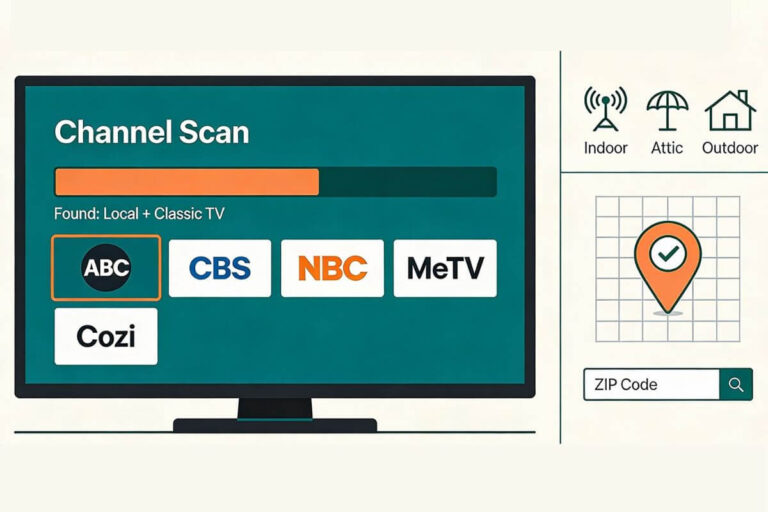
Why Indoor TV Antennas Fail in Rural Areas
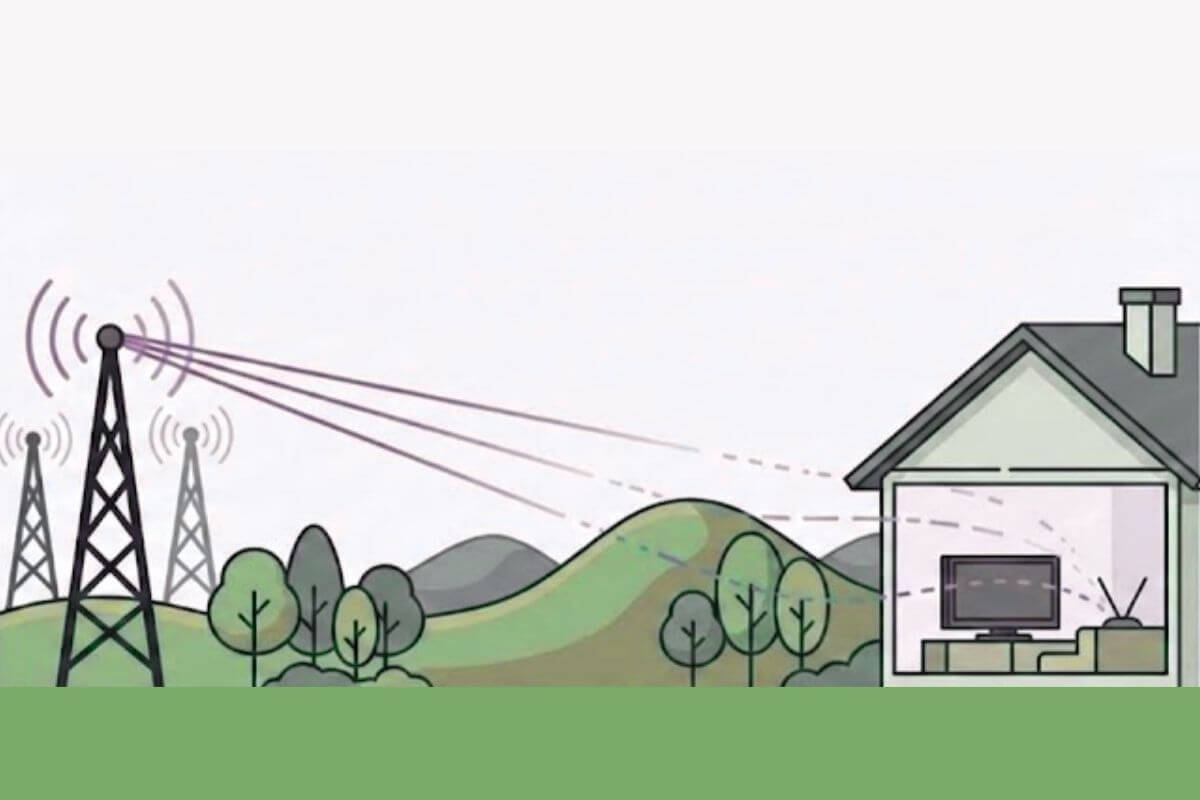
If you live in a rural area and use an indoor TV antenna, sometimes nothing you do works.
You scan for channels.
You move the antenna.
You scan again.
And the TV still says “no signal” or “no channels found.”
This is one of the most common indoor antenna problems rural homes face. It’s because indoor antennas have real limits. And those limits matter much more in rural areas.
This article explains why indoor TV antennas fail in rural areas and what options work better.
If you’re trying to replace cable, our guide on how to cut TV cable explains when it makes sense to move from indoor to attic or outdoor instead of giving up.
Why Indoor Antennas Struggle in Rural Homes
Indoor antennas are made for homes that are close to TV broadcast towers.
In cities and suburbs, towers may be only 5 to 15 miles away.
In rural areas, they are often 30, 50, or even 70 miles away.
By the time the signal reaches your home, it may already be very weak, so it doesn’t pick up the channels you were hoping for.
Common reasons this happens include:
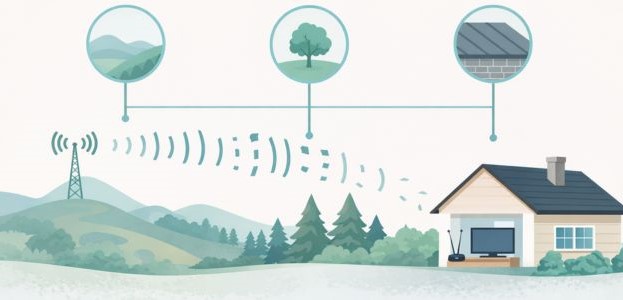
- Long distance from TV broadcast towers
- Hills or valleys between your home and the towers
- Trees blocking the signal
- Metal roofing or thick exterior walls
- Weak signal before it even enters the house
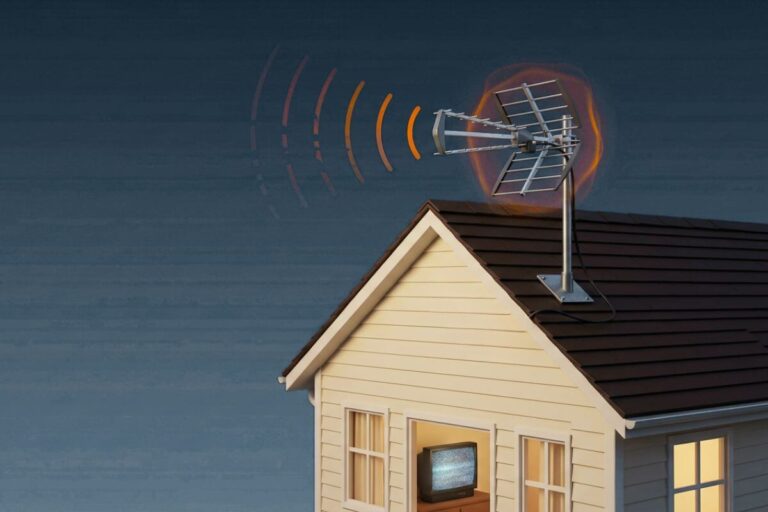
Weak rural reception may not make the picture disappear at once. It can first cause pixelation and picture breakup.
Important to Remember: Indoor antennas cannot strengthen a signal that never reaches the house in the first place.
Try Moving the Antenna
It pays to try every spot in the room:
- next to the TV
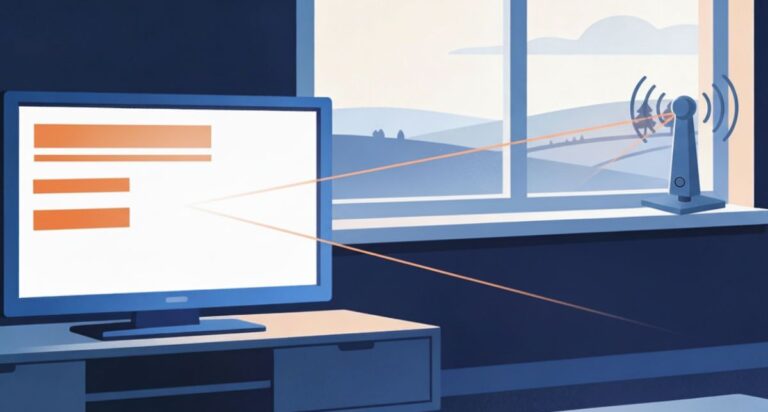
- by the window
- higher on a shelf
- on the opposite wall
Then try scanning for channels.
Your antenna notes and quick fixes, all in one place.
Get the Free TV Antenna Troubleshooting Checklist
A 4-page fill-in guide to keep near your TV.
Fill it in once. Use it when a channel disappears, the picture breaks up, or you need to fix your antenna again.
- Write down your must-have channels, tower direction, and antenna setup
- Follow the quick fixes when a channel goes missing or the picture freezes
- Find and record your best antenna spot so you do not have to start over
- Know when to rescan — and when not to rescan
- Keep the questions to ask an antenna pro before paying for new parts

Hi, I’m Kathy — I’ve helped thousands of readers ditch cable and get their local channels working for good.
“No Channels Found” After Scanning — What That Really Means
When your TV says ‘no channels found’ after scanning, it doesn’t mean the TV is bad. It means the TV could not detect a usable signal.

Other messages you may see are:
- No channels on antenna
- No TV signal with antenna
If the broadcast signal from the towers is too weak, the scan finishes — and finds fewer channels than you might have hoped – or nothing at all.
If Your TV Keeps Saying “No Signal”
In rural homes, this message usually means one of three things:
- The signal is too weak
- The signal is fading in and out
- The TV cannot hold a steady connection
The words No Signal boil down to a reception problem. You may be too far from the broadcast tower to get a good signal.
Tower Distance Matters More Than the Antenna Itself
Indoor antennas do not reach out and grab distant signals. They only receive what reaches your home naturally.
That’s why TV antenna tower location and TV signal location matter so much.
See what free over-the-air channels are available where you live and how strong the signal should be by going to the AntennaWeb site. It provides signal prediction and local channel maps.
Golden Rule of Antenna Reception: If towers are far away — or blocked by land and trees — indoor antennas usually struggle. Even expensive indoor antennas behave the same way when the signal is weak.
Distance is often the first problem to rule out. See realistic indoor TV antenna range to understand when towers may simply be too far away.
Does an Indoor Antenna Have to Be by a Window?
A window can help slightly because walls block the signal more than glass. However, a window cannot fix:
- Long distance from towers
- Hills or trees
- Weak broadcast strength
If the signal does not reach your home strongly, window placement won’t solve the problem. But the alternative is true also–keeping it near a window will help get signals more easily.
When Do Indoor TV Antennas Work in Rural Areas?
Your best bet for good reception from your antenna occurs when:
- TV towers are within about 20–30 miles
- The land between is mostly flat
- There are few trees or obstructions
- The antenna is near an outside wall or window
When an Outdoor Antenna Becomes the Realistic Solution
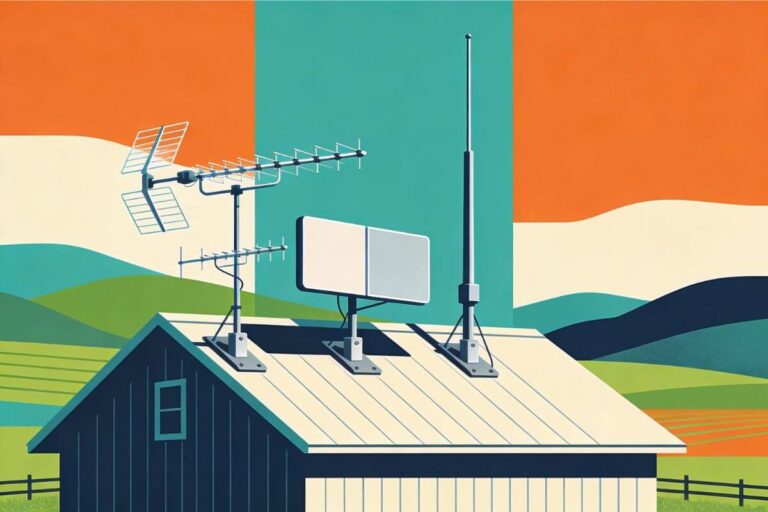
For many rural homes, an outdoor antenna is the only reliable option. Outdoor antennas work better because they:
- Sit above trees and rooflines
- Receive a stronger signal before it weakens
- Stay more stable over time
Attic Antennas: A Middle Option for Some Homes
Some homeowners ask if an attic antenna can work instead of installing one outside.
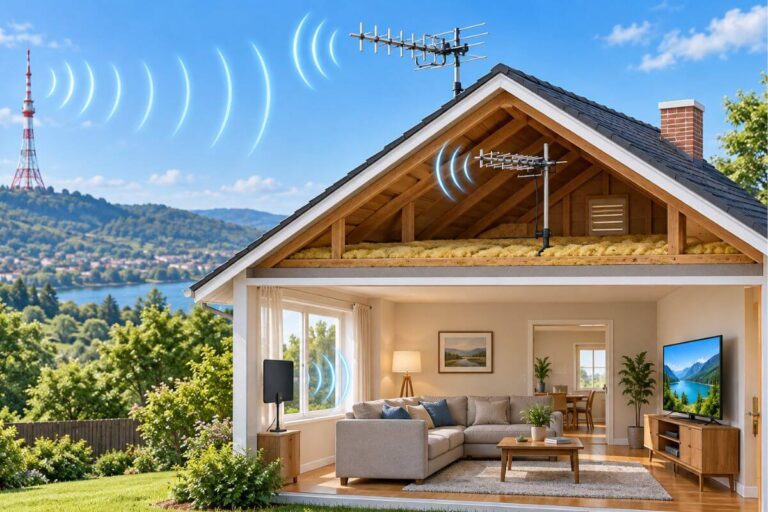
An attic antenna is placed inside the roof space of the house. It sits higher than an indoor antenna but remains protected from weather.
In some rural homes, an attic antenna can help if:
- The roof is not metal
- There are few trees nearby
- The attic has open space
- The TV towers are not extremely far away
However, attic antennas still have limits:
- Roof materials, insulation, and distance from towers can weaken the signal — sometimes nearly as much as indoor placement.
- If your home has metal roofing or foil-backed insulation, an attic antenna usually will not work well.
For many rural homes, an outdoor antenna still provides the strongest and most stable reception.
Learn the difference between attic and outdoor antennas here.
4 Things to Check Before Replacing Your Antenna
- Make sure the TV was rescanned recently
- Check that the coax cable is firmly connected
- Avoid unnecessary amplifiers indoors
- Confirm where your local towers are located
This guide shows how to check tower direction to your location.
Frequently Asked Questions
Why does my indoor antenna work sometimes but not all the time?
This usually happens when the TV signal is very weak. Small changes — weather, wind in trees, or time of day — can cause the signal to drop in and out. When the signal isn’t strong enough, the TV can lose the channel.
Why do I lose channels after they were working before?
Channels can disappear if the signal weakens or shifts slightly. This is common in rural areas where towers are far away and reception is already unstable. Rescanning may help temporarily, but it will not fix weak signal problems.
Will a stronger or more expensive indoor antenna fix rural reception?
Usually no. All indoor antennas rely on the same broadcast signal. If the signal reaching your home is weak, a more expensive antenna cannot create a signal that isn’t there. It can only improve the signal you are already getting.
Do amplified indoor antennas work better in rural areas?
They can— but only if a weak signal is already reaching the antenna. Amplifiers cannot help if no usable signal reaches the house and in some cases, amplification can actually make reception worse.
If you move to an attic or outdoor antenna and still have a weak but usable signal, see my guide to the best TV antenna amplifiers for rural areas to learn when a preamplifier may help.
Why does my TV say “no signal” even though everything is connected?
This message usually means the antenna signal is too weak for the TV to lock onto. It does not mean the TV, remote, or cables are broken.
How far away can TV towers be for an indoor antenna to work?
Indoor antennas usually work best when towers are within about 25 to 30 miles. Beyond that distance, reception becomes unreliable for most rural homes.
Does placing the antenna higher really help?
Sometimes a small amount, but height inside the house cannot overcome long distance, hills, or trees. Raising the antenna indoors helps far less than placing an antenna outdoors.
Wrap Up
Indoor antennas are affordable and easy — but they are not designed for every location.
If you’re dealing with indoor antenna reception problems, the cause is usually distance, terrain, and your home’s materials — not “a bad antenna” and not something you did wrong.
Once you understand the limits, you can stop the endless rescanning, returns, and frustration and make a clear next move: Improve placement, switch to a better indoor model, or step up to an attic/outdoor setup if your signal is simply too weak indoors.
And when you do get the right setup for your location, the payoff is real: More free local channels, plus lots of classic TV channels, right at your fingertips.