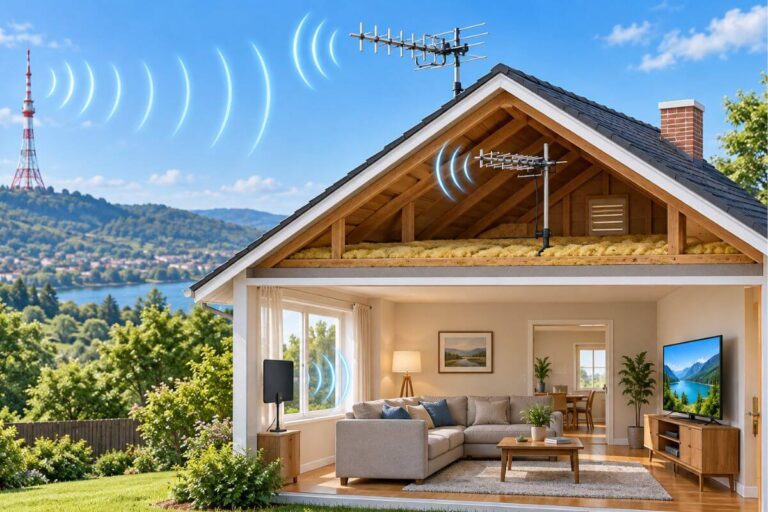
How High Should an Outdoor TV Antenna Be?
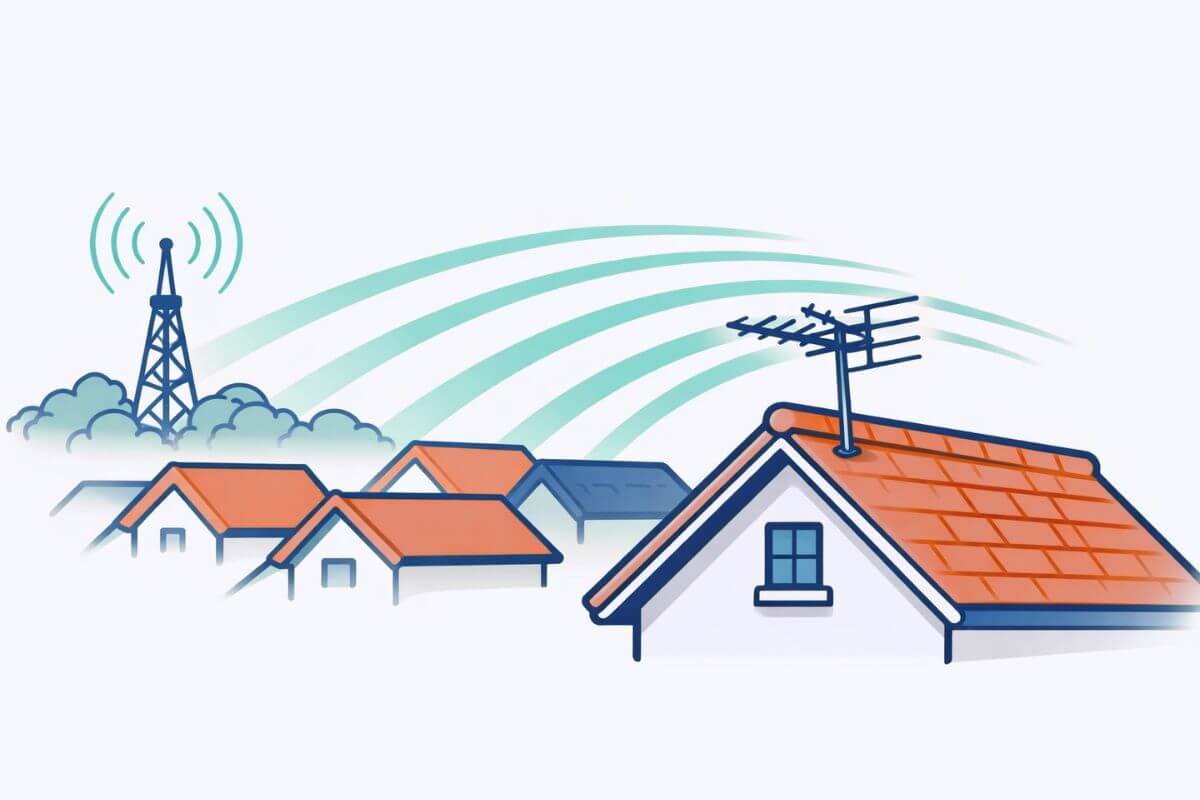
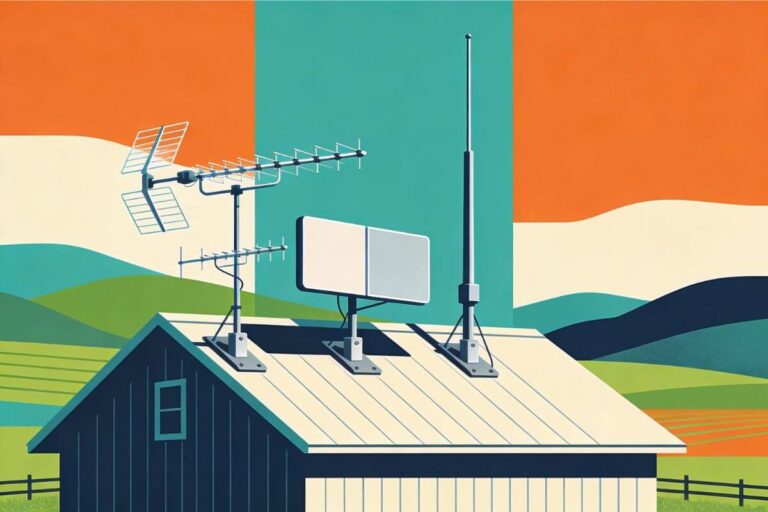
Outdoor TV antennas work best when mounted about 10–30 feet high. The ideal height depends on distance from broadcast towers and nearby obstacles like trees or buildings.
In general:
- 10–20 feet for strong signal areas.
- 20–30 feet for typical suburban setups.
- 30–40 feet for rural areas or heavy tree cover.
If you live more than 30 miles from broadcast towers, raising the antenna higher can improve reception and help bring in more channels.
If you also have weak or inconsistent reception, this guide on how to strengthen TV antenna signal covers the next fixes to try.
What Affects How High Your TV Antenna Should Be?
Outdoor TV antenna height isn’t one-size-fits-all. The ideal height depends on how far you are from broadcast towers and what’s blocking your signal.
If you’re close to towers with a clear line of sight, you may get strong reception even at lower heights. But in areas with trees, buildings, or hills, raising the antenna higher helps clear those obstacles and improves signal reliability.
Does Antenna Height Really Affect TV Reception?
Even raising an antenna a few feet can improve reception, especially in areas with weaker signals or more obstacles.
In my own setups, I’ve seen channels come and go just from raising the antenna a few feet. In one case, moving it from below the roofline to just above it brought back multiple missing channels instantly.
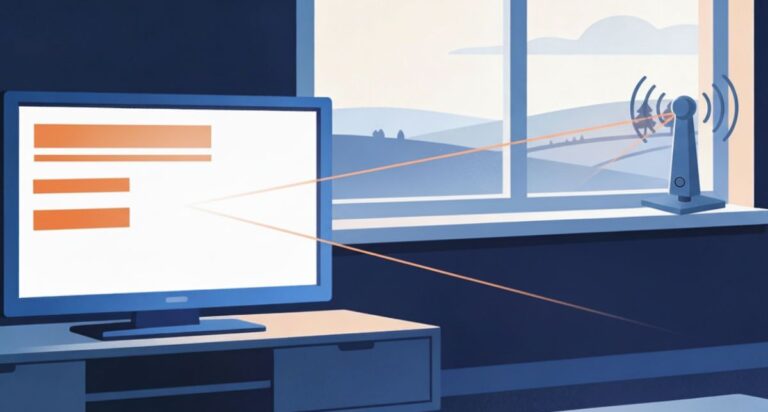
Raising the antenna improves line of sight to broadcast towers, reduces interference, and stabilizes channels that cut in and out.
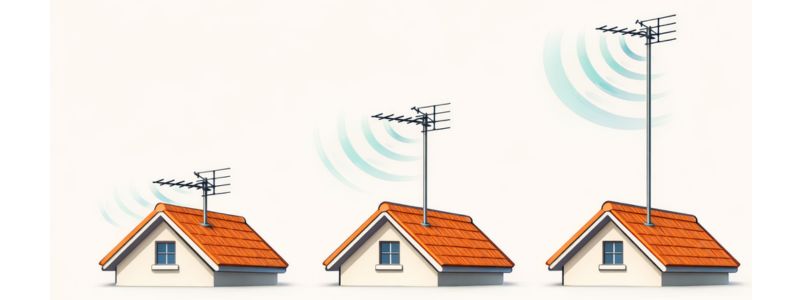
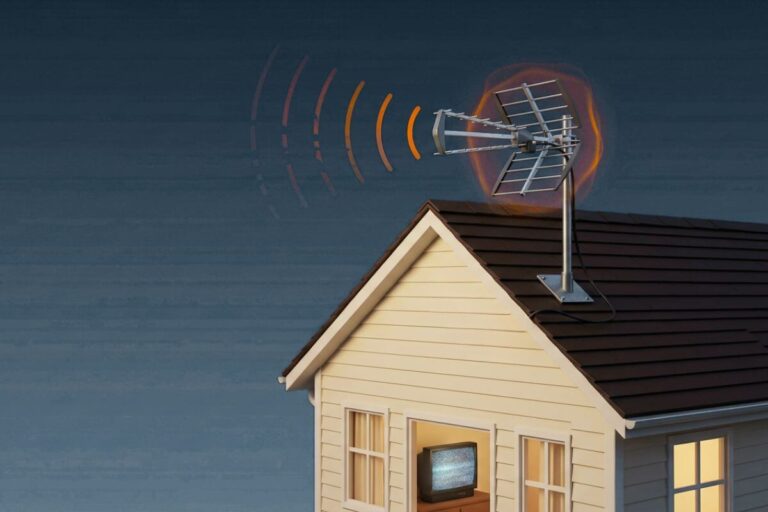
This is also why outdoor installations usually outperform attic setups. Roofing materials, insulation, and structural framing can weaken signals before they ever reach the antenna, while outdoor placement allows signals to arrive with fewer obstructions.
If you’re deciding between locations, understanding the differences between attic and outdoor placement can help explain why signal strength changes so dramatically between setups.
???? In practical terms, getting the antenna above obstacles usually improves reception more than buying a more expensive model.
If you’re building a complete cord-cutting setup, this is one part of getting reliable local channels without cable.
How High Should an Outdoor TV Antenna Be Minimum?
Most outdoor TV antennas work best between 10 and 30 feet high. Homes farther from broadcast towers or blocked by trees often need 30 to 40 feet for reliable reception. Higher placement reduces obstructions and improves signal strength, which can increase the number of channels your TV receives.
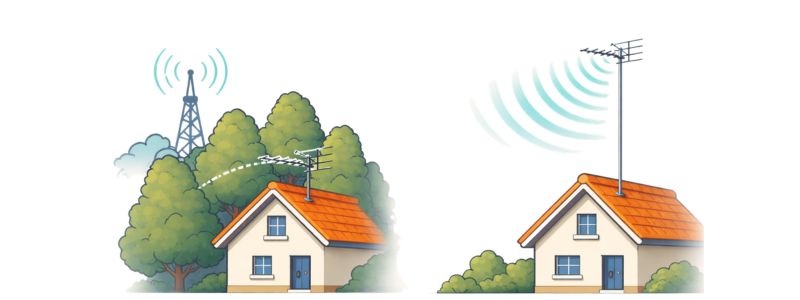
Trees, neighboring houses, and even parts of your own roof can weaken signals if the antenna sits too low.
In rural or wooded areas, antennas often need additional elevation because signals travel farther and encounter more interference along the way. Raising the antenna just a few feet higher can sometimes restore channels that were previously unstable.
How High Should a TV Antenna Be Above the Roof?
Most outdoor TV antennas should be mounted at or slightly above the roof peak, typically 10–20 feet above ground. The goal is to clear nearby obstacles like trees and neighboring houses, not to achieve maximum height.
Is Higher Always Better for a TV Antenna?
Higher usually improves TV antenna reception, but once there is a clear path to broadcast towers, raising it further rarely adds more channels. In most homes, positioning and direction matter more than extreme height.
If your antenna is already above the roofline, adjusting direction often improves reception more than raising it higher. If channels are still weak or dropping out, follow these steps to strengthen your TV antenna signal.
Your antenna notes and quick fixes, all in one place.
Get the Free TV Antenna Troubleshooting Checklist
A 4-page fill-in guide to keep near your TV.
Fill it in once. Use it when a channel disappears, the picture breaks up, or you need to fix your antenna again.
- Write down your must-have channels, tower direction, and antenna setup
- Follow the quick fixes when a channel goes missing or the picture freezes
- Find and record your best antenna spot so you do not have to start over
- Know when to rescan — and when not to rescan
- Keep the questions to ask an antenna pro before paying for new parts

Hi, I’m Kathy — I’ve helped thousands of readers ditch cable and get their local channels working for good.
Ideal Outdoor TV Antenna Height Based on Broadcast Tower Distance
The distance between your home and local broadcast towers plays a major role in how high an outdoor TV antenna needs to be. TV signals travel in straight lines, so the farther they travel, the more likely they are to weaken or encounter obstacles along the way.
For homes located within about 10–15 miles of broadcast towers, mounting near the roof peak is often enough for stable reception. But as distance increases — especially beyond 25 to 40 miles — elevation becomes more important because signals arrive weaker and closer to ground-level obstructions.
This is why two homes using the same antenna can have completely different results. One may receive dozens of channels easily, while another needs additional height simply to clear trees, terrain, or neighboring rooftops.
In general, the farther you are from broadcast towers, the more antenna height helps compensate for signal loss — but only up to a practical limit.
How to Position an Outdoor TV Antenna for Best Reception
If your antenna is already high but still unstable, the issue may be direction rather than height. Here’s how to aim your antenna correctly for the strongest signal.
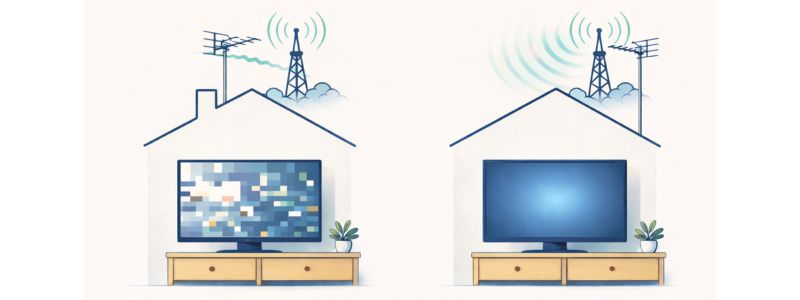
Most outdoor antennas are directional, meaning they receive signals best when aimed toward the strongest transmission source. Even small adjustments — rotating the antenna slightly or shifting its placement along the roofline — can noticeably improve channel stability.
Start by identifying the direction of nearby broadcast towers using a free signal locator tool like AntennaWeb. Mount the antenna so the front elements point toward those towers, keeping it clear of metal surfaces, chimneys, and dense tree coverage whenever possible.
If channels freeze, pixelate, or disappear intermittently, positioning is often the cause rather than antenna quality. Careful alignment usually improves reception more than replacing equipment or adding amplifiers.
How to Fix Poor Reception by Adjusting Antenna Height
If your outdoor antenna is not working well, height is often the easiest fix.
Try this:
- Raise the antenna 3–5 feet at a time
- Move it above the roof peak if possible
- Recheck channels after each adjustment
- Avoid placing it near metal or dense trees
Common Signs Your Outdoor TV Antenna Is Too Low
An outdoor TV antenna that sits too low often shows clear warning signs. Many reception problems blamed on equipment are actually caused by placement height.
Here are the most common indicators that your antenna may need to be raised:
Channels appear and disappear throughout the day.
Signals can become blocked as atmospheric conditions change or as trees move in the wind. A slightly higher position often stabilizes reception.
Pixelation or freezing during otherwise clear weather.
When signals arrive weak or partially obstructed, the TV struggles to decode them consistently.
Some channels work perfectly while others never lock in.
Broadcast towers are often located in different directions or distances. A low antenna may receive stronger nearby stations but miss weaker ones entirely.
Reception improves temporarily when you reposition the antenna.
If small adjustments help, elevation usually provides a more permanent fix.
Before replacing your antenna, improving placement is usually the simpler and more effective solution. In many cases, raising the antenna just a few feet produces a bigger improvement than upgrading equipment.
???? If your channels are already dropping out, follow this step-by-step guide to get missing TV channels back before adjusting height further.
When Raising an Outdoor Antenna Stops Helping
Raising an outdoor TV antenna improves reception only up to a certain point. After the antenna clears nearby obstacles and achieves a reasonably direct signal path to broadcast towers, additional height usually produces little or no improvement.
Several factors limit how much height can help:
Signal strength from the broadcast tower.
If you live far beyond a station’s broadcast range, elevation alone cannot compensate for weak transmission power.
Terrain and geography.
Large hills, dense forest areas, or terrain valleys can block signals even when antennas are mounted high above the roofline.
Antenna design limitations.
Every antenna has a maximum reception capability based on its size and directional elements. Height cannot overcome hardware limits. If you’re installing outside specifically to improve reception range, choosing the right outdoor setup matters.
Cable loss and connections.
Very long coaxial cable runs or poor connections may reduce signal strength before it reaches the television.
In many homes, the best results come from balancing height, positioning, and realistic expectations rather than continuously raising the antenna higher. Once reception becomes stable and channels remain consistent, additional elevation rarely provides noticeable gains.
At this point, signal loss is usually caused by interference or distance, not height alone. This guide explains why outdoor antennas lose signal even when mounted properly.
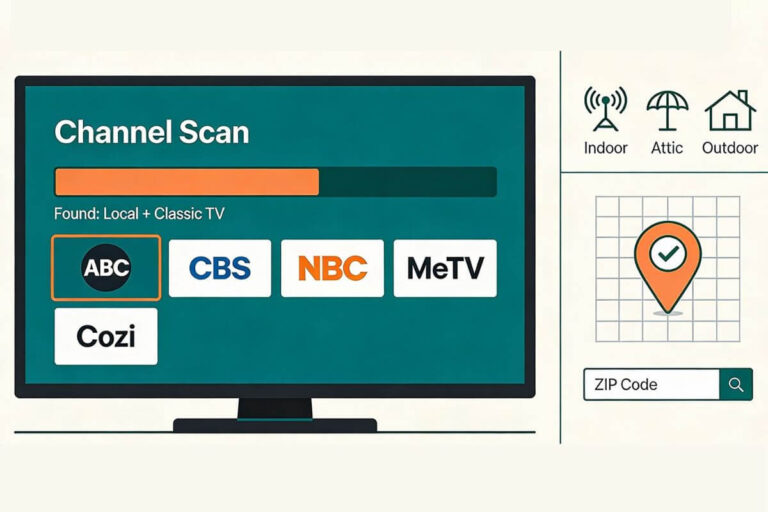
Wondering what channels are even available in your area? Check what channels you can get with an antenna in your area before adjusting height or considering a new antenna.
When You May Need a Different Antenna
You may need a different antenna if:
- You live 50+ miles from towers
- Trees or terrain block your signal
- Channels drop out even after raising height
- Reception only works at certain times
If you’re far from towers or dealing with heavy tree cover, your current antenna may not be strong enough. See the best outdoor TV antennas for stronger long-range performance.
If you’re unsure whether your setup type is the problem, this breakdown guide to indoor vs outdoor TV antennas explains which works best based on your location.
Frequently Asked Questions
How high does an outdoor TV antenna need to be above the roof?
Most outdoor TV antennas work best when mounted at or slightly above the roof peak, typically 10–20 feet above ground. The goal is clearing nearby obstacles rather than achieving extreme height.
Does raising an outdoor antenna always improve reception?
No. Raising an antenna helps only until it clears obstructions and achieves a clear signal path. Beyond that point, additional height usually provides little improvement.
How do I know if my antenna is too low?
Common signs include channels cutting in and out, pixelation during clear weather, or some stations never locking in while others work normally.
Is a taller pole better for outdoor antennas?
A taller pole can help in wooded or rural areas, but stability and proper mounting matter more than maximum height. Excessive elevation rarely improves reception once signals are clear.
Wrap Up
Outdoor TV antenna height matters because it clears obstacles and improves signal strength — but more height is not always better.
For most homes, mounting the antenna at or slightly above the roofline provides the best balance of performance and stability. If reception issues continue, adjusting position or upgrading your antenna is usually more effective than simply raising it higher.
Once your antenna is set up correctly, you can start watching classic TV shows completely free using antenna channels and streaming apps.