Do TV Antenna Boosters Work? What Actually Helps
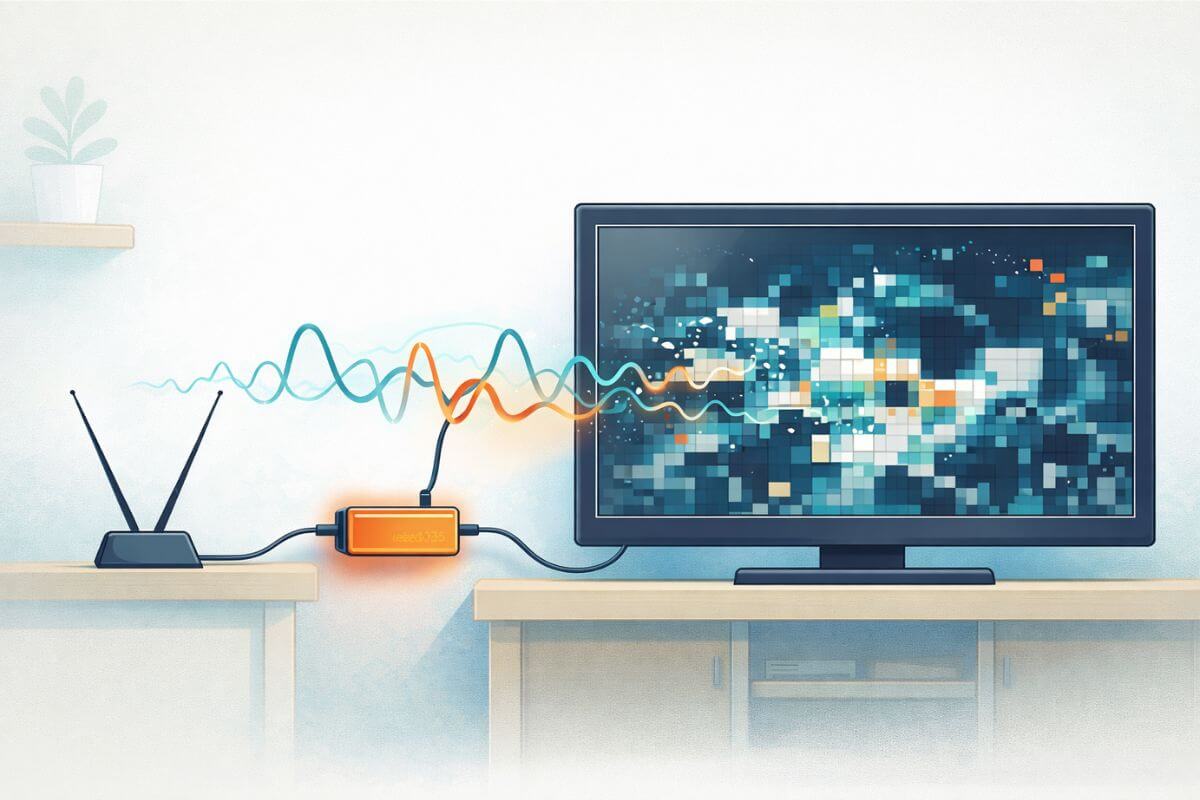
TV antenna boosters can help, but only when your antenna already receives a usable signal.
A booster is most useful when signal is lost through a long coax cable, splitter, or multiple-TV setup.
It will not pull in a station your antenna cannot already receive. It also will not fix poor reception caused by distance, hills, trees, walls, or bad antenna placement.
In some homes, adding a booster can actually make reception worse by overloading the TV tuner or amplifying interference.
Before adding a booster, find out what is causing your TV picture to pixelate.
This guide explains when a TV antenna booster helps, when it does not, and what to try before buying one.
Fast Answer: Do TV Antenna Boosters Work?
Yes — but only in the right situation.
A TV antenna booster can help when your antenna already receives a usable signal but some of that signal is lost through:
- A long coaxial cable
- A splitter
- More than one TV
- Extra cable connections
A booster usually will not help if:
- The channel is already missing
- You live too far from the broadcast tower
- Hills, trees, walls, or buildings block the signal
- Your antenna is poorly placed
- The signal is already unstable
Simple rule: If the antenna works well when connected directly to one TV, but reception gets worse after adding cable or splitters, a booster may help.
If reception is weak before the booster is added, start with these ways to strengthen your TV antenna signal before adding amplification.
Use a TV Antenna Booster If:
- Your antenna works well on one TV but reception gets worse after adding a splitter.
- You have a long coaxial cable run.
- Channels are clear before the signal is split.
- Your antenna already receives a stable signal.
Skip the Booster If:
- Channels are already missing before you add it.
- You live far from broadcast towers.
- Trees, hills, walls, or buildings block the signal.
- Your indoor antenna is already unreliable.
- Reception gets worse after installing the booster.
Quick rule: A booster can help with signal loss after the antenna. It cannot fix a weak signal the antenna never received.
What a TV Antenna Booster Actually Does
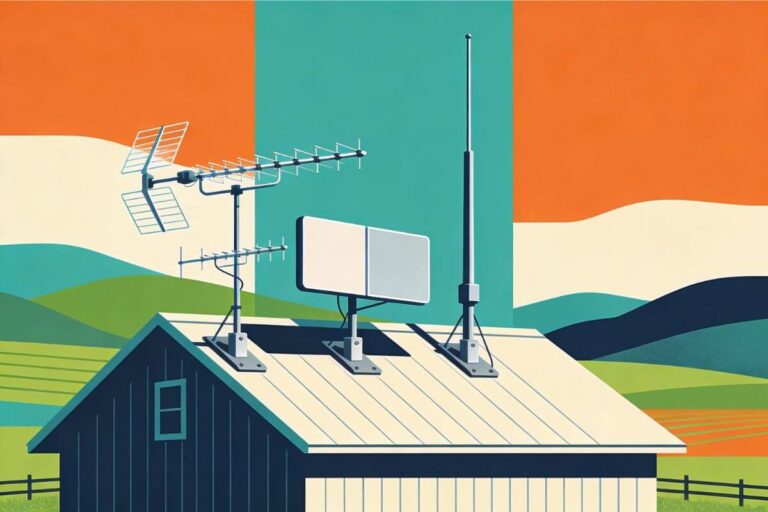
There are two main types of TV antenna boosters:
- Preamplifier: Usually installed close to the antenna
- Distribution amplifier: Usually used indoors when one antenna feeds several TVs
Both amplify the signal the antenna has already received.
A booster does not:
- Pull in a station the antenna cannot receive
- Increase the antenna’s true range: If distance is the problem, check how far an indoor TV antenna can realistically reach before buying a booster.
- Fix hills, trees, walls, or other signal obstacles
- Create a signal that is not there
A booster simply increases the strength of the signal traveling through the cable.
That can help when a good signal is being weakened by a long cable run or splitter.
But a booster also amplifies noise and interference. If the incoming signal is already poor, boosting it may make reception less stable instead of better.
When a TV Antenna Booster Can Help
A booster is most useful when the antenna signal is good at the source but becomes weaker before it reaches the TV. If you already know an amplifier makes sense for your setup, I compared the best TV antenna amplifiers for rural areas for weak signals, long coax runs, and multiple TVs.
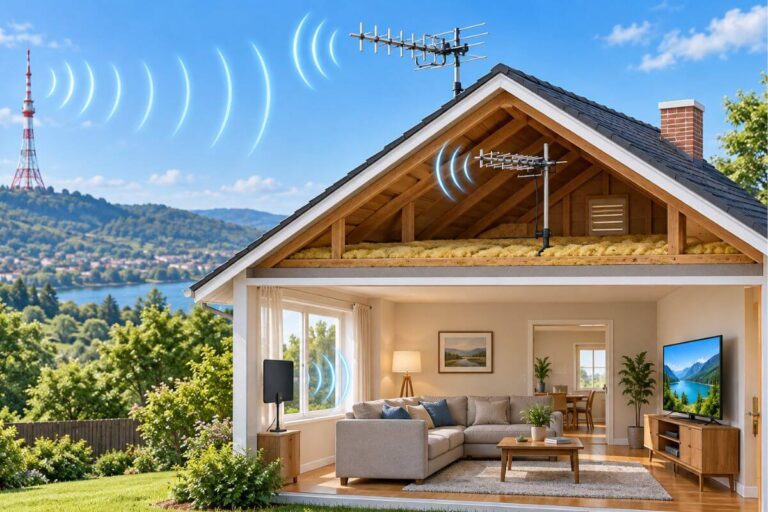
This often happens with a long coaxial cable, a splitter, or when one antenna feeds several TVs.
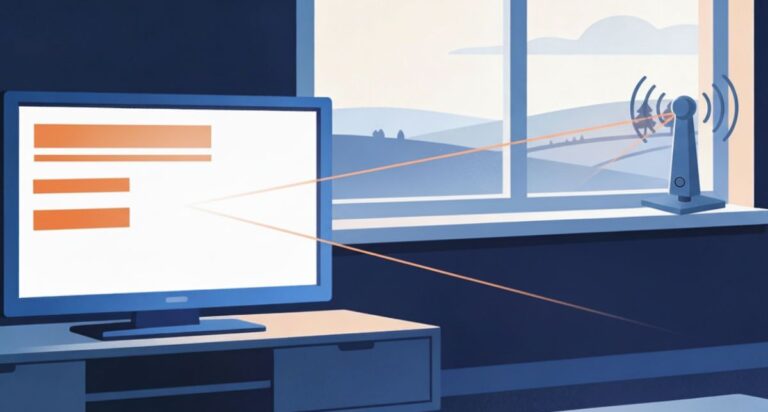
If reception is already poor when the antenna is connected directly to one TV, the problem is probably somewhere else.
When TV Antenna Boosters Make Reception Worse
This is where the frustration happens.
Boosters make things worse when:
- You live far from broadcast towers
- Your antenna is indoors in a rural area
- Trees, hills, or walls block the signal
- The signal is already unstable

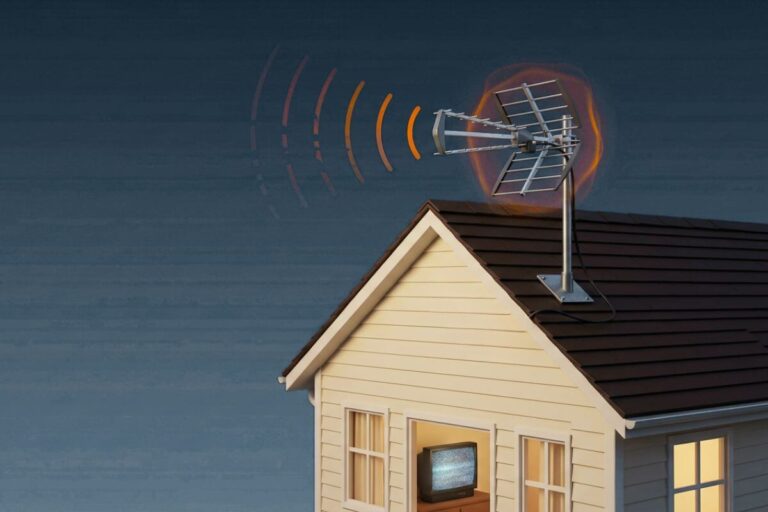
In these situations, the booster amplifies noise along with the signal — leading to pixelation, freezing, or channels disappearing entirely.
This is why many people report that channels came in better before adding the booster — then vanished afterward.
If reception became worse only after adding the amplifier, remove it and test the antenna directly on one TV. If channels are still missing, follow these antenna troubleshooting steps for missing local channels.
Why Boosters Can’t Fix Distance Problems
A booster cannot make a distant broadcast signal reach your antenna.
Distance, hills, trees, and low antenna height can weaken the signal before the antenna ever receives it.
If towers are far away, check how far an indoor TV antenna can realistically reach.
If indoor reception is simply too weak for your location, compare indoor vs. outdoor TV antennas before spending money on more amplification.
Your antenna notes and quick fixes, all in one place.
Get the Free TV Antenna Troubleshooting Checklist
A 4-page fill-in guide to keep near your TV.
Fill it in once. Use it when a channel disappears, the picture breaks up, or you need to fix your antenna again.
- Write down your must-have channels, tower direction, and antenna setup
- Follow the quick fixes when a channel goes missing or the picture freezes
- Find and record your best antenna spot so you do not have to start over
- Know when to rescan — and when not to rescan
- Keep the questions to ask an antenna pro before paying for new parts

Hi, I’m Kathy — I’ve helped thousands of readers ditch cable and get their local channels working for good.
Splitters, Multiple TVs, and Signal Loss
A booster can be useful when one antenna feeds more than one TV.
Splitters divide the signal, and long coaxial cable runs can weaken it further. If channels work well when the antenna is connected directly to one TV but become unstable after adding a splitter or extra cable, a booster may help replace some of that lost signal.
If reception is already weak before the splitter is added, amplification is unlikely to solve the problem.
Signs a Booster Is Hurting Your Signal
Remove the booster and test the antenna directly on one TV if:
- You lost channels after installing it
- Channels started freezing or pixelating
- Reception became less stable
- A channel scan finds fewer stations than before
These problems may mean the booster is amplifying interference or overloading the TV tuner.
If channels are still missing without the booster, follow these steps to get missing TV channels back.
Should You Try a Booster or Move the Antenna First?
Move the antenna first if channels are missing, pixelating, or only coming in sometimes. A better location, more height, or a clearer path toward the broadcast towers usually helps more than amplification. Try a booster only after the antenna already works well when connected directly to one TV.
If channels are already missing, use these steps to get missing TV channels back before buying a booster.
What to Try Before Buying a Booster
Before adding amplification:
- Connect the antenna directly to one TV.
- Tighten the coaxial connections.
- Remove any splitter temporarily.
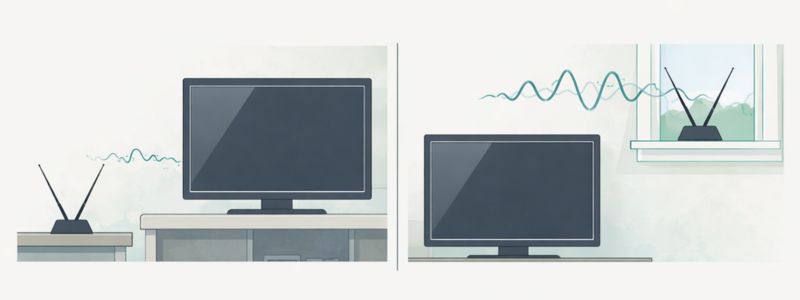
- Move the antenna higher or closer to a window.
- Check the weak channel again.
If placement is the problem, see how to aim an indoor TV antenna.
If several channels remain weak, try these ways to strengthen your TV antenna signal.
If indoor reception is still unreliable, compare indoor and outdoor TV antennas before buying a booster.
Frequently Asked Questions
Do TV antenna boosters work in rural areas?
Sometimes — but only in limited situations.
Boosters can help with signal loss inside the home, such as long cable runs or splitters. They cannot pull in stations that are too far away or blocked by terrain.
In rural homes, height and antenna placement usually matter far more than amplification.
Is an amplified TV antenna better than a regular one?
An amplified antenna includes a booster built into it.
This can help preserve a good signal, but it does not extend range or overcome distance. If the antenna itself cannot receive a clean signal, amplification will not fix the issue.
Why did my channels disappear after adding a booster?
This usually happens when the signal becomes overloaded.
Instead of improving reception, the booster amplifies interference and causes the tuner to lose lock on channels.
Removing the booster often brings channels back.
Do I need a TV antenna booster if I live close to towers?
Usually no.
Homes close to broadcast towers often have strong signals already. Adding a booster in these situations commonly makes reception worse, not better.
Will a TV antenna booster get more channels or improve reception?
A booster may improve reception if your antenna already receives a usable signal that is weakened by a long cable, splitter, or multiple-TV setup.
It will not pull in stations your antenna cannot already receive or extend the antenna’s true range.
Wrap-Up
TV antenna boosters can help, but only when the problem is signal loss inside your home — TV antenna boosters can help when a good signal is being weakened by a long coaxial cable, splitter, or multiple-TV setup.
They will not pull in distant stations, extend antenna range, or fix reception blocked by trees, hills, walls, or poor antenna placement.
Before buying a booster, test the antenna directly on one TV, check the cable connections, try a better antenna position, and rescan your TV channels.
If the signal is still weak, better placement, more height, or a different antenna setup will usually help more than extra amplification.
If you are using an antenna to replace cable, see how to cut cable without losing local channels.