Outdoor vs Attic TV Antenna: Which Works Better for Reliable Reception?
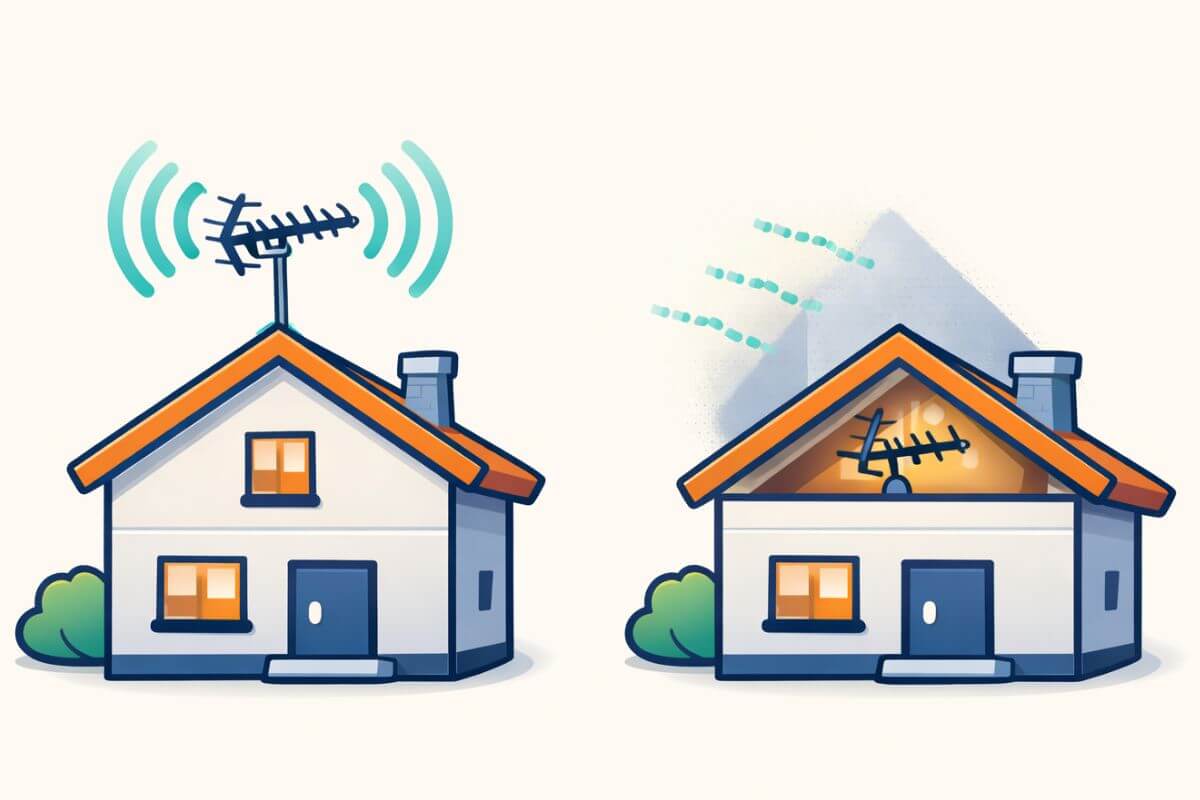
An attic TV antenna can work if your signal is already strong and your roof does not block reception. An outdoor TV antenna usually works better when channels freeze, disappear, or towers are far away.
The main difference is simple: attic antennas are easier and hidden, while outdoor antennas usually get stronger and more reliable reception.
Use this guide to decide when attic placement is enough, when outdoor is the smarter move, and how to avoid wasting money on the wrong setup.
Quick Answer: Outdoor vs Attic TV Antenna
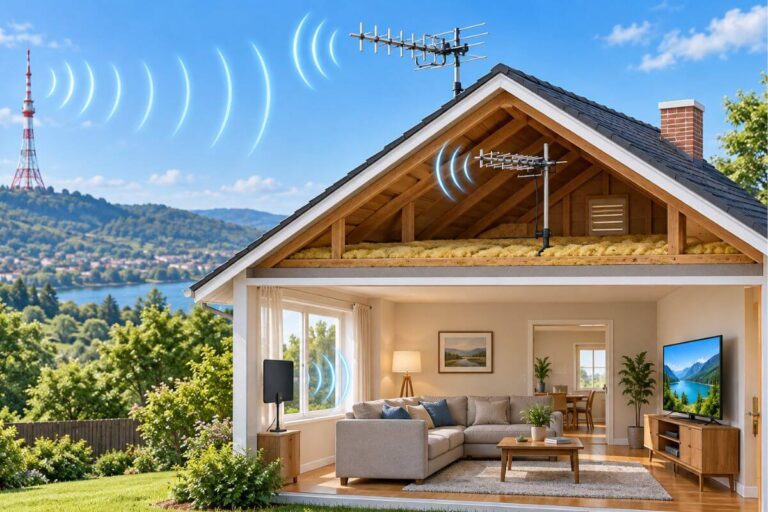
In most homes, an outdoor TV antenna gets better reception because signals reach it without passing through roofing materials. An attic antenna can work well if you live near broadcast towers, your roof is not metal, and your signal is already strong.
If your channels already freeze, disappear, or come in weak indoors, outdoor placement is usually the better long-term fix.
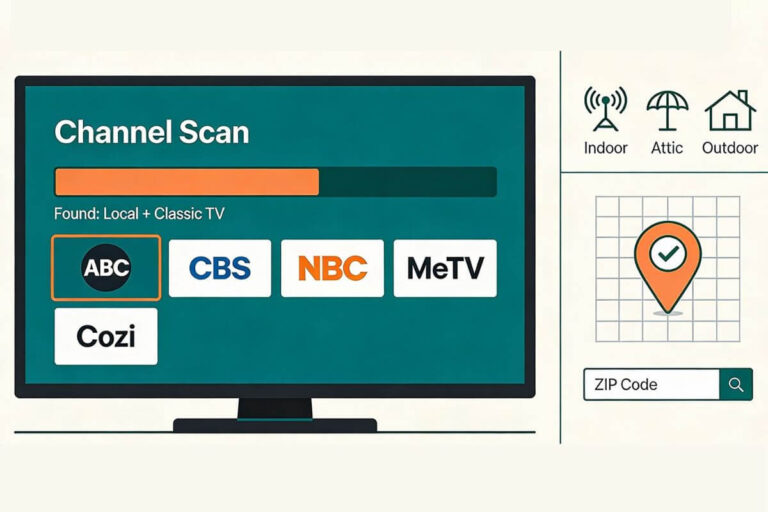
Before choosing either setup, check what channels you can get with an antenna at your address.
Choose an outdoor TV antenna if:
- You live in a rural or wooded area.
- Towers are 30+ miles away.
- Channels freeze, pixelate, or disappear.
- Your roof has metal or radiant barrier insulation.
- You want the strongest and most reliable signal.
Choose an attic TV antenna if:
- You live near a city or suburb.
- Indoor reception already gets some channels.
- Your roof is asphalt or wood, not metal.
- You want the antenna hidden.
- You are testing before mounting outdoors.
What Is an Attic TV Antenna?
An attic TV antenna is a regular over-the-air antenna installed inside your attic instead of outside on the roof, wall, or pole.
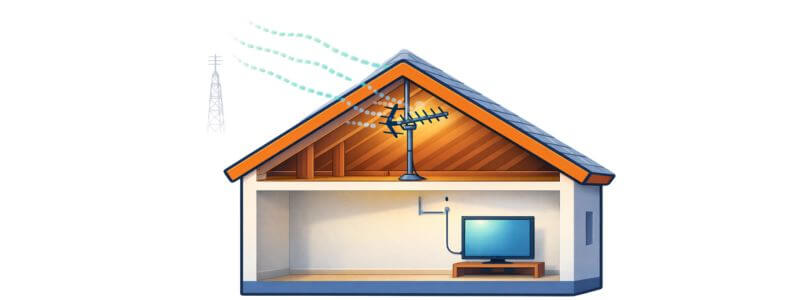
It connects to your TV with a coax cable, just like an outdoor antenna. The difference is placement. An attic antenna stays hidden and protected from weather, but the signal has to pass through your roof before it reaches the antenna.
That can weaken reception.
Signals may pass through:
- roof shingles
- plywood or roof decking
- insulation
- wood framing
- electrical wiring
- ductwork
- radiant barrier foil
- metal roofing
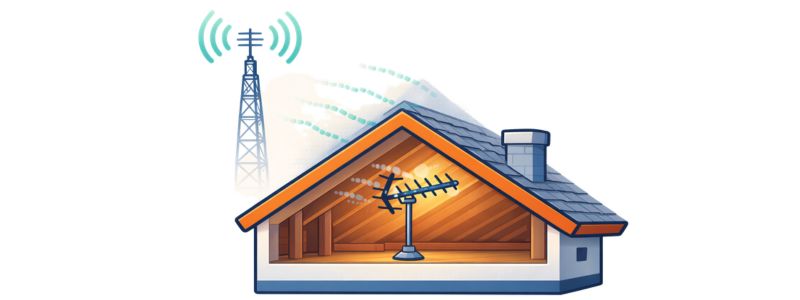
Attic antennas work best when signal is already strong. If your indoor antenna barely works, moving the antenna to the attic may help, but it may not be enough.
If you are trying to understand whether your current signal is strong enough, check this guide to TV antenna signal strength.
Do Attic Antennas Work?
Yes, attic antennas can work. But they work best in the right homes.
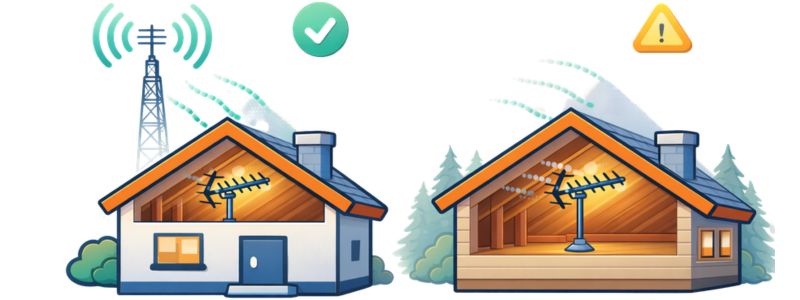
An attic antenna usually works well when:
- broadcast towers are within about 20–30 miles
- the roof is not metal
- the home is not surrounded by heavy trees
- terrain is fairly flat
- indoor reception already gets at least some channels
An attic antenna often struggles when:
- you live far from towers
- you are in a rural or wooded area
- your roof has metal or radiant barrier insulation
- channels already drop indoors
- terrain blocks the signal
An attic antenna is best viewed as a middle step between indoor and outdoor. It is stronger than a small indoor antenna near the TV, but usually weaker than an outdoor antenna mounted above the roofline.
If you are unsure whether an indoor setup is already at its limit, this guide explains how far an indoor TV antenna can realistically reach.
Your antenna notes and quick fixes, all in one place.
Get the Free TV Antenna Troubleshooting Checklist
A 4-page fill-in guide to keep near your TV.
Fill it in once. Use it when a channel disappears, the picture breaks up, or you need to fix your antenna again.
- Write down your must-have channels, tower direction, and antenna setup
- Follow the quick fixes when a channel goes missing or the picture freezes
- Find and record your best antenna spot so you do not have to start over
- Know when to rescan — and when not to rescan
- Keep the questions to ask an antenna pro before paying for new parts

Hi, I’m Kathy — I’ve helped thousands of readers ditch cable and get their local channels working for good.
When an Attic TV Antenna Makes Sense
An attic antenna can be a good choice when you want better reception than indoor placement but do not want equipment outside.
Choose attic if:
- you live near towers
- your roof is not metal
- indoor reception is decent but not perfect
- you want a hidden installation
- you are testing before committing to outdoor mounting
The attic can be a smart first upgrade if you are close enough to towers. But if channels still disappear after testing different attic locations, outdoor placement is usually the next step.
Before You Install: Test the Attic Signal First
Before you permanently mount an antenna in the attic, test the signal first. Place the antenna as high as possible, keep it away from metal ducts or foil insulation, aim it toward your broadcast towers, and run a full channel scan.
If channels are still weak, missing, or unstable after testing a few attic spots, outdoor placement is usually the better fix.
How to Install a TV Antenna in the Attic
Before you permanently mount an antenna in the attic, test first. Start with these steps:
1. Choose the highest attic spot
Place the antenna near the attic peak if possible. Higher placement usually improves reception.
2. Keep it away from metal
Avoid ductwork, wiring, foil insulation, metal supports, and large appliances. Metal can block or reflect TV signals.
3. Aim toward the towers
Even in an attic, direction matters. Aim the antenna toward your broadcast towers if you know where they are.
4. Run the coax carefully
Avoid sharp bends in the cable. Keep the cable path simple.
5. Scan before permanent mounting
Do a temporary test first. Run a channel scan, check your channels, then move the antenna if needed.
An attic installation works best as a test step — if signals remain inconsistent, moving the antenna above the roofline usually provides the biggest improvement. If attic reception remains inconsistent, many homeowners eventually move to an outdoor setup for stronger results.
If you think outdoor may be the better choice, follow this step-by-step guide on how to install an outdoor TV antenna.
When an Outdoor TV Antenna Works Better
An outdoor TV antenna is usually the better choice when reception needs to be reliable.
Choose outdoor if:
- towers are more than 30 miles away
- channels freeze or pixelate
- your attic setup is inconsistent
- your roof blocks signal
- trees, hills, or buildings are in the way
- you want the strongest local channel setup
Moving the antenna outside often improves reception because the signal no longer has to fight through roofing materials first.
Outdoor vs Attic Antenna Signal Strength
Signal strength is the biggest difference between attic and outdoor antennas.
An outdoor antenna receives the signal before it passes through your roof. That usually means:
- stronger reception
- more stable channels
- fewer dropouts
- better results in rural areas
- better performance during bad weather
An attic antenna receives the signal after it passes through roofing materials. That can reduce signal strength before the antenna ever gets a chance to capture it.
This is why two homes can use the same antenna and get very different results. Placement matters as much as the antenna itself.
Outdoor placement usually works better because height reduces obstacles. Before mounting one, it helps to understand how high an outdoor TV antenna should be.
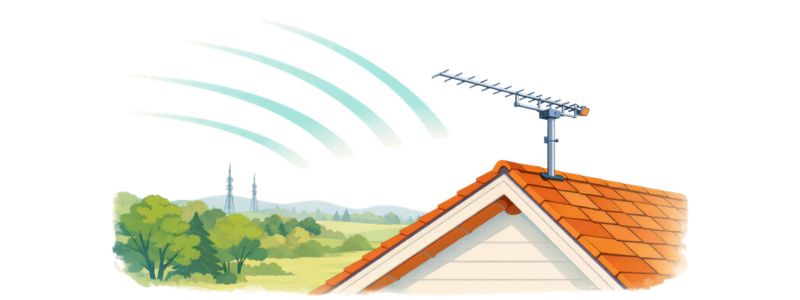
Attic vs Roof Antenna Installation Differences
Choosing between an attic and roof installation often comes down to convenience versus performance. Both options use the same type of antenna, but placement changes how easily signals reach it and how complex installation becomes.
Attic installation
An attic setup keeps the antenna protected and hidden from view. Installation is usually simpler because you can work indoors without climbing onto the roof.
Advantages:
- easier and safer installation
- protected from weather and wind
- no exterior mounting hardware visible
Limitations:
- signals must pass through roofing materials
- performance varies by home construction
- may require repositioning to find stable reception
Roof (Outdoor) installation
A roof-mounted antenna places the antenna above most obstacles, allowing signals to reach it more directly.
Advantages:
- strongest and most consistent reception
- fewer signal obstructions
- better performance in rural or wooded areas
Considerations:
- requires outdoor mounting hardware
- cable routing may take more planning
- exposure to weather over time
For many homeowners, attic installation is a reasonable first test. If channels remain unstable, moving the antenna outdoors typically solves reception problems without needing new equipment.
If you are installing outside, also make sure the setup is safe. This guide explains how to ground a TV antenna.
Outdoor vs Attic TV Antenna: Side-by-Side Comparison
Both attic and outdoor antennas can deliver free local channels, but placement changes how reliably signals reach your TV. The differences become clearer when comparing performance, installation, and long-term results side by side.
Outdoor TV Antenna
Signal strength:
Strongest possible reception because signals reach the antenna without passing through roofing materials.
Best for:
Rural homes, wooded areas, or locations far from broadcast towers.
Installation:
Mounted on roof, chimney, or exterior wall.
Reliability:
Most consistent channel stability with fewer dropouts.
Visibility:
Visible from outside the home.
Attic TV Antenna
Signal strength:
Moderate and dependent on roof materials and placement.
Best for:
Suburban homes close to broadcast towers with strong signals.
Installation:
Mounted indoors inside attic space.
Reliability:
Can vary depending on weather, obstacles, and interference.
Visibility:
Hidden from view and protected from weather.
Biggest Differences (Quick Summary)
- Outdoor antennas receive signals directly from broadcast towers.
- Attic antennas receive signals through roofing and insulation.
- Metal roofs and radiant barriers can weaken attic reception.
- Antenna height and clear line-of-sight matter more than antenna price.
Which One Most Homes Should Choose
If stable reception is your priority, an outdoor antenna is usually the better long-term solution. Homes closer to broadcast towers may find an attic installation works well enough while keeping the antenna hidden.
Many homeowners start with an attic setup and move outdoors only if reception proves inconsistent — a practical approach that avoids unnecessary installation work upfront.
What If Channels Still Freeze or Disappear?
If channels still freeze, disappear, or break up after testing attic placement, the issue is usually weak signal, blocked signal, or unstable reception.
Try these before buying another antenna:
- Move the antenna higher.
- Aim it toward the towers.
- Remove unnecessary splitters.
- Check the coax cable.
- Rescan after each major change.
If reception is still weak, follow these steps to strengthen your TV antenna signal before replacing equipment.
Be careful with amplifiers. A booster can help in some setups, but it can also make reception worse if the signal is already strong or overloaded. Learn when TV antenna boosters work and when they don’t.
Frequently Asked Questions
Do attic TV antennas work as well as outdoor antennas?
No. Outdoor antennas usually receive stronger signals because they sit above roofing materials. Attic antennas can work well near broadcast towers but often lose some signal strength due to insulation and roof interference.
Can I try an attic antenna before installing outdoors?
Yes. Many homeowners test reception in the attic first. If channels are stable, the attic setup may be sufficient. If signals drop out, moving the antenna outdoors usually improves reliability.
Does a metal roof affect an attic antenna?
Yes. Metal roofing can block or reflect broadcast signals, which often makes attic installations unreliable. In these homes, outdoor mounting typically works better.
Is an outdoor antenna harder to install than an attic antenna?
Outdoor installation requires mounting hardware and safe roof access, but once installed it usually requires fewer adjustments because reception is more stable.
Wrap Up
Both attic and outdoor antennas can deliver free TV without cable, but placement matters more than the antenna itself.
An attic antenna is a reasonable first step if your signal is already strong, your roof is not metal, and you want the antenna hidden.
But if channels freeze, disappear, or change throughout the day, outdoor placement is usually the better long-term fix. Moving the antenna outside gives the signal a clearer path and reduces interference from roofing materials.
Start by testing the attic if it is safe and practical. If reception is still unstable, move the antenna outside instead of buying another antenna.
The goal is simple: reliable local channels every time you turn on the TV.