5 Best TV Antenna Amplifiers for Rural Areas (2026)

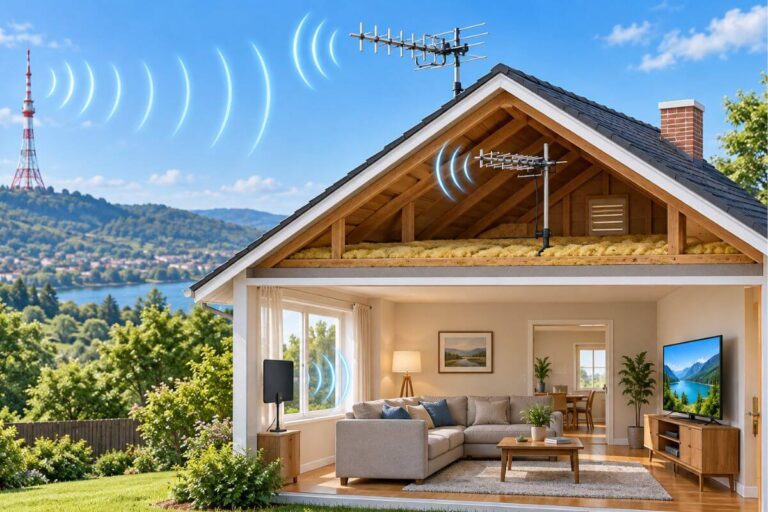
An amplifier does not pull in channels your antenna cannot receive. It helps prevent an already weak signal from being lost through long coax cables, splitters, or multiple TVs.
Finding the best TV antenna amplifier for rural areas can help when your antenna signal is weak because of a long cable run, splitters, or several TVs.
But an amplifier is not a magic fix. The right one can help protect a weak signal before it reaches your TV. The wrong one can make reception worse.
Quick Picks: Best TV Antenna Amplifiers for Rural Areas
Choose the amplifier that matches your biggest reception problem, whether that is a weak rural signal, a long coax run, or several TVs.
This page contains affiliate links. If you buy through them, we may earn a small commission at no extra cost to you. This helps support our research.
| Best For | Our Pick | Works Best When | Check It |
|---|---|---|---|
| Best overall | Channel Master PreAmp 1 | You have a weak rural signal and want a choice of lower or stronger signal boost | View on Amazon |
| Simple fixed-gain setup | Winegard Boost XT LNA-200 | Your outdoor antenna receives a weak signal that must travel through a long coax cable | View on Amazon |
| Automatic gain control | Televes TForce 560383 | You want automatic VHF and UHF gain adjustment without choosing a manual boost setting. | View on Amazon |
| Multiple TVs | Antennas Direct ClearStream JUICE4 | One antenna feeds up to four TVs and splitting the signal is causing reception loss | View on Amazon |
| Budget | RCA TVPRAMP12E | You want a lower-cost outdoor preamplifier for a weak signal or longer cable run | View on Amazon |
The Best TV Antenna Amplifiers for Rural Areas
The best amplifier depends on why your signal is getting weaker. Some are made for long coax cables. Others are better for several TVs or for signals that vary in strength.
The five picks below solve different problems common in rural homes.
Channel Master PreAmp 1 – Best Overall
The Channel Master PreAmp 1 is my best overall pick because you can choose between two levels of amplification. This is useful in rural areas where some signals may be much weaker than others.
The PreAmp 1 mounts close to your antenna, where it can strengthen the signal before it travels through a long coax cable. You can choose 17 dB or 30 dB of gain, which simply means how much the signal is boosted, from the power inserter inside your home. That gives you more control than an amplifier with only one fixed setting.
It also has built-in filters that help block interference from cell signals and FM radio. The weatherproof metal housing lets you install the amplifier outdoors near the antenna, which is usually the best location for a preamplifier.

Benefits
- Two boost settings: Choose 17 dB or 30 dB depending on your signal
- Good for long cable runs: Helps make up for signal lost through coax
- Low noise: Adds less unwanted noise while boosting the signal
- Cell signal filtering: Helps block 4G and 5G LTE interference
- Outdoor installation: Can mount close to the antenna
- No outdoor outlet needed: Power travels through the coax cable
- Power-loss bypass: The TV signal can still pass through if the amplifier loses power
Features
- 17 dB low-gain setting
- 30 dB high-gain setting
- Less than 2 dB typical noise figure
- VHF and UHF support
- Built-in LTE filter
- Built-in FM filtering
- Weatherproof metal housing
- Indoor or outdoor installation
- Power inserter included
- Mast mounting bracket included
- Works with non-amplified outdoor TV antennas
- Passive bypass mode
Pros
- Adjustable signal boost makes it useful for different rural signal conditions
- High 30 dB setting can help with significant cable loss
- Lower 17 dB setting reduces the chance of using too much amplification
- Installs close to the antenna
- Strong weatherproof housing
- Filters unwanted cell and FM signals
- Can keep passing the antenna signal during a power failure
Cons
- Costs more than basic antenna amplifiers
- 30 dB can be too much amplification for some homes
- It will not fix a signal the antenna is not receiving
- A splitter must allow power to pass through if it is installed between the amplifier and power inserter
- More setup is involved than with a simple indoor booster
My Take
The Channel Master PreAmp 1 is the strongest all-around choice in this guide because you are not locked into one boost level.
Start with the 17 dB setting and check your usual channels. Try 30 dB if reception still breaks up, especially with a long cable run. Keep the setting that gives you the steadiest picture. More boost does not always mean better reception.
It cannot make a blocked or missing broadcast signal appear. But if your rural antenna is already receiving a weak usable signal, the PreAmp 1 gives you more control over keeping that signal strong enough to reach your TV.
Best if you have an outdoor antenna, a long coax run, and want adjustable amplification instead of a one-setting booster.
Winegard Boost XT LNA-200 – Best for Simple Fixed-Gain Setup
The Winegard Boost XT LNA-200 is my pick for weak or distant rural signals. It is an outdoor preamplifier made to strengthen a usable signal before it travels through a long coax cable.
The Boost XT amplifies VHF and UHF signals separately. Winegard lists typical gain of 18 dB and a typical noise figure of 1 dB. It is designed for a non-amplified outdoor antenna and mounts near the antenna, before the long cable to your TV.

Benefits
- Good for weak signals: Helps preserve distant stations that your antenna already receives
- Low-noise amplification: A 1 dB noise figure helps keep added interference low
- Separate VHF and UHF amplification: Handles both TV frequency bands separately
- Helps with long coax runs: Boosts the signal before cable loss weakens it further
- Outdoor placement: Installs close to the antenna, where a preamplifier works best
Features
- 18 dB typical amplification
- 1 dB typical noise figure
- VHF and UHF support
- Winegard TwinAmp technology
- Outdoor preamplifier
- Power inserter included
- 110V power adapter included
- Mast mounting hardware included
- Works with non-amplified outdoor antennas
- 1-year limited warranty
Pros
- Very low noise for a consumer antenna preamplifier
- Good fit for rural homes with weaker signals
- Simple one-level boost design
- Helps compensate for signal loss over longer coax runs
- Amplifies VHF and UHF separately
Cons
- Fixed gain; no manual boost adjustment.
- Does not give you the adjustable amplification of the Channel Master PreAmp 1
- Not designed for amplified antennas
- Will not overcome a hill, dense trees, or another obstruction if the antenna cannot receive a usable signal
- May be unnecessary if your towers are close and your signal is already strong
My Take
The Winegard Boost XT LNA-200 is a strong choice when your rural antenna already receives distant stations but you lose some of that signal before it reaches the TV.
Its biggest advantage is its combination of 18 dB of amplification and very low added noise. That makes it especially useful for a long coax run where you want to preserve a weak signal rather than simply add as much amplification as possible.
The Channel Master gives you more control because its signal boost is adjustable. But the Winegard is simpler and makes sense if you want a proven outdoor preamp without extra settings.
Best if you have a weak but usable rural signal and a long coax run between your outdoor antenna and TV.
Televes TForce 560383 – Best for Automatic Boost Control
The Televes TForce 560383 is my pick if you want automatic gain control instead of choosing a boost setting yourself. It adjusts amplification for the VHF and UHF bands separately as incoming signal levels change.
That can help when one band needs more amplification than the other. It does not adjust each station individually. The unit mounts near your antenna and includes FM and 5G filtering, plus an indoor power supply with two TV outputs.

Benefits
- Automatic signal adjustment: Changes the amount of amplification as signal conditions change
- Helps prevent overload: Reduces boost when signals are already strong
- Separate VHF and UHF control: Each band is adjusted on its own
- Good for changing rural signals: Useful when some stations are much stronger than others
- Interference filtering: Helps block FM and 5G signals
- Outdoor installation: Mounts close to the antenna
Features
- Up to 31 dB boost for UHF
- Up to 22 dB boost for VHF
- 0–15 dB automatic adjustment range
- Low-VHF, High-VHF, and UHF support
- Independent VHF and UHF automatic boost control
- FM filtering
- 5G filtering
- Weather-resistant outdoor housing
- Power supply included
- Two outputs on the included power supply
- Works with standard TV antennas
Pros
- Automatically adjusts instead of making you choose one boost setting
- Helps reduce the risk of too much amplification
- Useful when rural stations arrive at very different strengths
- Handles both VHF and UHF channels
- Strong interference filtering
- Designed for outdoor mounting near the antenna
Cons
- More expensive than a basic fixed-boost amplifier
- More complicated than a simple plug-in booster
- Automatic amplification cannot fix a signal blocked by hills or heavy terrain
- Higher maximum boost does not mean it will receive channels your antenna cannot already detect
My Take
The Televes TForce 560383 makes the most sense when your reception is uneven.
You want automatic VHF and UHF gain adjustment without choosing a manual boost setting. That can be especially helpful in rural areas where one tower may be close enough for a strong signal while another is much farther away.
The Channel Master gives you manual control. The Televes does more of that work for you automatically.
Best if your rural channels vary a lot in strength and you want the amplifier to adjust itself.
Antennas Direct ClearStream JUICE4 – Best for Multiple TVs
The Antennas Direct ClearStream JUICE4 is my pick for homes that use one antenna with several TVs. It is a distribution amplifier, which means its main job is to make up for signal loss caused by splitting one antenna feed into multiple lines.
The JUICE4 has four outputs and provides about 8.5 dB of amplification per port across most TV frequencies. It can be used with indoor or outdoor antennas and is especially useful when you have several TVs, long coax runs, or both.

Benefits
- Feeds up to four TVs: Replaces a standard splitter with amplified outputs
- Helps recover splitter loss: Keeps more of the antenna signal reaching each TV
- Good for long cable runs: Useful when some TVs are 50 feet or more from the antenna
- Flexible placement: Install indoors or outdoors under an eave, sheltered from direct rain.
- Low added noise: Typically under 3 dB
- Useful in rural homes: Helps preserve an already usable antenna signal throughout the house
Features
- Four amplified outputs
- About 8.5 dB amplification per port from 54–750 MHz
- About 7.5 dB amplification per port from 751–1000 MHz
- Less than 3 dB typical noise figure
- 75-ohm F-type coax connections
- Indoor or outdoor compatibility
- Weather-resistant zinc die-cast housing
- Surge protection on all ports
- 12V power adapter included
- Short coaxial cable included
Pros
- Useful when channels work on one TV but break up after the antenna feed is split between several TVs
- Four amplified outputs avoid the need for a separate booster at each TV
- Includes a power adapter and 40-inch coaxial cable
- Four outputs make it useful for whole-house setups
- Helps compensate for both splitter and cable loss
- Can be installed indoors or outdoors
- Rugged housing
- Does not require buying separate amplifiers for each TV
Cons
- It is not a preamplifier for pulling a very weak signal through a long cable from the antenna
- It cannot create channels your antenna is not receiving
- May be unnecessary if you only use one TV
- Outdoor installation requires proper weatherproof coax connections
- A power inserter is needed for some outdoor setups and is not included
My Take
The Antennas Direct ClearStream JUICE4 is the best choice in this guide when your antenna already receives a usable signal but that signal gets weaker after you split it between several TVs.
That distinction matters. If a usable signal weakens along the cable from your antenna, a preamplifier near the antenna may help. If reception is good at one TV but gets worse after adding two, three, or four sets, the JUICE4 is the better tool.
Best if one antenna feeds several TVs and you need to make up for signal loss from splitters and long coax runs.
RCA TVPRAMP12E – Best Budget TV Antenna Amplifier
The RCA TVPRAMP12E is my budget pick for rural homes that need an outdoor preamplifier without spending as much as the Channel Master or Televes.
It is designed for outdoor antennas in low-signal areas. The RCA provides 16 dB of VHF amplification and 22 dB of UHF amplification, so it can help preserve a weak signal before it travels through a longer coax cable. It also uses separate VHF and UHF amplification and includes a switchable FM trap.

Benefits
- Lower-cost outdoor preamp: Costs less than many premium models
- Made for weak-signal areas: Designed specifically for outdoor antennas
- Separate VHF and UHF amplification: Gives each TV band its own boost
- Helps with long coax runs: Strengthens the signal close to the antenna
- FM interference control: Switchable FM trap can reduce interference
- Outdoor mounting: Installs near the antenna where a preamp is most useful
Features
- 16 dB VHF amplification
- 22 dB UHF amplification
- Separate VHF and UHF amplification
- Extremely Low Noise circuitry
- Switchable FM trap
- Combined VHF/UHF input
- Outdoor mast mounting
- Power injector
- Weather protection for outdoor connections
- 1-year limited warranty
Pros
- Lower price than the premium picks
- Designed for weak rural signals
- Good amount of gain for longer cable runs
- Mounts close to the antenna
- Works with both VHF and UHF channels
- Simple design without complicated controls
Cons
- No automatic boost control like the Televes
- Fixed amplification—you cannot turn the boost up or down
- Can still over-amplify a signal that is already strong
- Will not fix reception if your antenna cannot receive a usable signal
My Take
The RCA TVPRAMP12E is the best choice here if price matters but you still want a real outdoor preamplifier made for weak-signal areas.
It does not have the extra controls of the Channel Master or Televes, but it covers the basics well: VHF and UHF amplification, outdoor mounting, and enough amplification to help offset signal loss through coax.
For a simple rural setup with one outdoor antenna and a longer cable run, it gives you the features that matter without paying for extras you may not need.
Best if you want an affordable outdoor preamplifier for a weak but usable rural TV signal.
Your antenna notes and quick fixes, all in one place.
Get the Free TV Antenna Troubleshooting Checklist
A 4-page fill-in guide to keep near your TV.
Fill it in once. Use it when a channel disappears, the picture breaks up, or you need to fix your antenna again.
- Write down your must-have channels, tower direction, and antenna setup
- Follow the quick fixes when a channel goes missing or the picture freezes
- Find and record your best antenna spot so you do not have to start over
- Know when to rescan — and when not to rescan
- Keep the questions to ask an antenna pro before paying for new parts

Hi, I’m Kathy — I’ve helped thousands of readers ditch cable and get their local channels working for good.
How I Chose These TV Antenna Amplifiers
I compared manufacturer specifications, setup needs, and included parts to find options for long cable runs, several TVs, and different levels of signal boost.
I looked at:
- Gain and noise: How much each model boosts the signal and how much noise it adds.
- VHF and UHF support: Whether it handles both TV broadcast bands.
- Boost controls: Fixed, adjustable, or automatic amplification.
- Installation: Where it mounts, how it gets power, and what parts come with it.
- TV connections: Whether it feeds one cable line or has outputs for several TVs.
Choose based on your setup—not the highest boost number.
Do You Need a Preamplifier or Distribution Amplifier?
A preamplifier boosts the signal near the antenna, before a long cable run. A distribution amplifier boosts and splits one antenna feed among several TVs.
Choose based on where you lose reception.
A preamplifier may help when:
- Your antenna receives a usable signal, but it weakens along the cable to your TV.
- You need to boost that signal before a long cable run.
Having a roof antenna or living far from towers does not, by itself, mean you need a preamplifier.
A distribution amplifier may help when:
- Channels work well with one TV connected directly.
- Channels break up or disappear after you add a splitter.
- Several TVs have long cable runs.

Some setups use both, but adding a second amplifier can cause overload. Check reception with one before adding another.
Simple rule: Choose a preamplifier for loss along the cable from the antenna. Choose a distribution amplifier for loss when feeding several TVs. If your channels already work reliably, you may need neither.
If you’re not sure whether the antenna itself is the problem, see my guide to the best outdoor TV antennas for rural areas.
Best Amplifier for Multiple TVs
The ClearStream JUICE4 is my pick when channels work on one TV but break up after you add a splitter. Its four amplified outputs can feed up to four TVs while helping offset signal loss.
If all your TVs already receive clear, steady channels through a regular splitter, you do not need to replace it with an amplifier.
Best Amplifier for a Long Coax Cable
The Winegard Boost XT LNA-200 is a simple option when your antenna receives a usable signal that weakens along a long cable. It provides fixed amplification with low added noise.
Choose the Channel Master PreAmp 1 if you want two boost settings to try. A preamplifier mounts near the antenna, so it boosts the signal before the long cable run.
Cable length alone does not tell you whether you need an amplifier. Before buying, check your TV antenna signal strength.

Will an Amplifier Help With Trees or Hills?
An amplifier cannot remove the blockage caused by trees or hills. It may help if a usable signal reaches your antenna but loses strength along the cable to your TV.
Start by checking the antenna’s direction and placement. A different spot or more height may improve reception, though extra height will not always clear a hill or dense trees.
See how high an outdoor TV antenna should be before changing the installation.
When a TV Antenna Amplifier Will Not Help
An amplifier helps with signal loss. It cannot fix every cause of missing channels. Check these problems before buying:
- Poor placement or aim: Try a better antenna location and check its direction first.
- The wrong antenna: Your antenna must support the VHF or UHF frequencies your local stations use.
- Loose or damaged cables: Fix bad connections and replace damaged cable before adding a boost.
- An already strong signal: Extra amplification can overload the amplifier or TV tuner, making reception worse.
- An existing amplifier: Adding a second one can cause too much boost. Check your current setup first.
If channels are missing, start with these fixes for an antenna not picking up local channels.
Don’t Buy Based on Huge Range or Gain Claims
A “200-mile range” claim does not tell you whether an amplifier will help at your home. Results depend on the signal your antenna receives and how much is lost through cables and splitters.
Higher gain means more boost—not better reception. Too much can overload the amplifier or TV tuner and make channels disappear or break up.
Choose based on the boost you need, added noise, and setup requirements, rather than the biggest number on the box.
For more on what amplification can fix, see Do TV Antenna Boosters Work?.
Frequently Asked Questions
Do TV antenna amplifiers really work?
Yes—TV antenna amplifiers can help when a usable signal loses strength through cables or splitters. They boost that signal before it reaches your TV. They cannot create a signal your antenna does not receive, and too much boost can make reception worse.
What is the best TV antenna amplifier for rural areas?
The Channel Master PreAmp 1 is my best overall pick because its two boost settings let you compare reception and keep the setting that works better. The setting affects all channels together.
The Winegard Boost XT is an alternative if you want fixed amplification with low added noise for a long cable run.
Where should an antenna amplifier be installed?
Install a preamplifier near the antenna, before the long cable to your TV. Install a distribution amplifier where one antenna feed splits into cables for several TVs.
Follow the model’s instructions for power connections and outdoor placement.
Can too much amplification make reception worse?
Yes. Too much amplification can overload the amplifier or TV tuner, causing channels to freeze, break up, or disappear. If your amplifier has adjustable gain, try a lower setting. More boost does not always mean better reception.
Do I need an amplifier for a 100-foot coax cable?
Not always. If channels break up or disappear after adding a longer cable, a preamplifier near the antenna may help offset signal loss. If your channels stay clear and steady, you may not need one.
Can one amplifier feed several TVs?
Yes. A distribution amplifier can feed several TVs from one antenna and help offset signal loss from splitting the feed.
The ClearStream JUICE4 has outputs for up to four TVs. If your channels already work well through a regular splitter, you may not need amplification.
Wrap Up
Before spending money, decide what you need to fix: channels dropping out along a long cable run or reception getting worse after adding more TVs. That helps you choose the right type of amplifier.
Buy from a seller that allows returns, and test the channels you actually watch.
A worthwhile upgrade means fewer interruptions—not the biggest boost number on the box.