Soundbar vs Headphones: Which Is Better for Clear TV Dialogue?

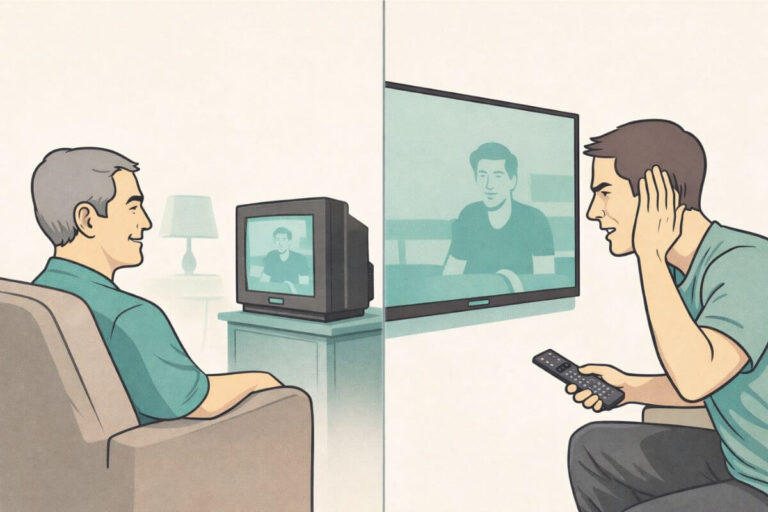
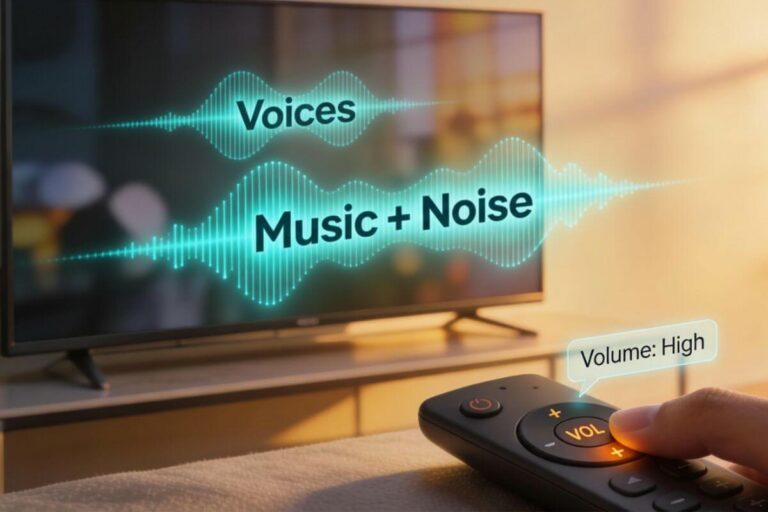
If turning up the TV volume makes everything louder except the voices, the problem usually isn’t volume—it’s clarity.
That’s why many people end up choosing between two common fixes: adding a soundbar or switching to TV headphones.
Both options are often recommended for hard-to-hear dialogue, but they work in very different ways. One improves how sound fills the room. The other sends speech directly to your ears.
This guide compares soundbars vs headphones for TV dialogue, explains what each option actually fixes, and helps you decide which one makes sense before you spend money or add more equipment to your setup.
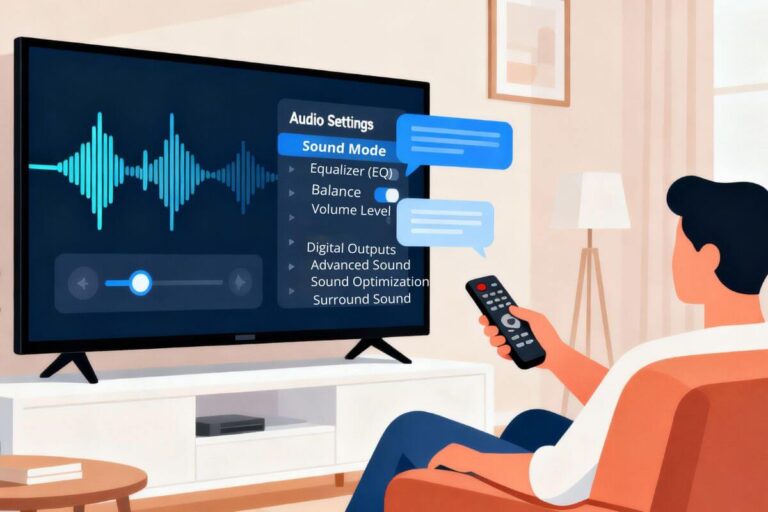
There are also a few free TV settings that can improve dialogue before adding new equipment.
Why TV Dialogue Still Sounds Unclear on Modern TVs
Even when the volume is high, dialogue can sound thin, buried, or hard to follow. That’s because modern TV audio mixes prioritize effects and music, while built-in speakers struggle to present speech cleanly in real rooms.
This is especially noticeable with older shows and dialogue-heavy programs.
What a Soundbar Actually Does for TV Dialogue (and What It Can’t)
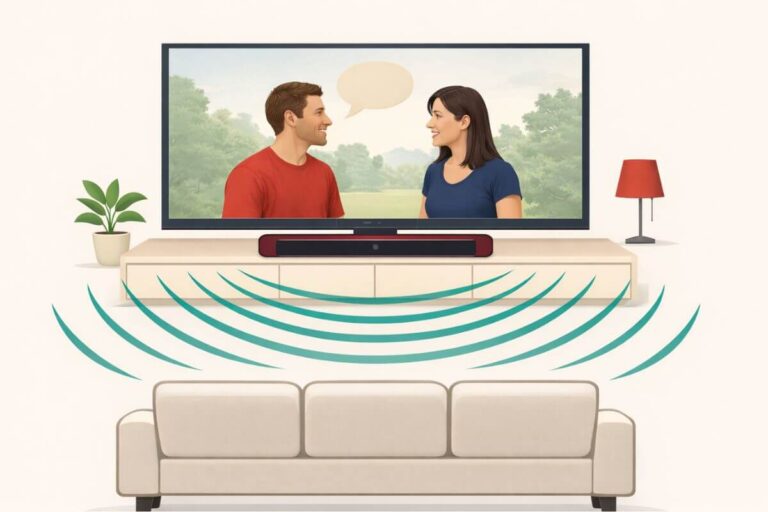
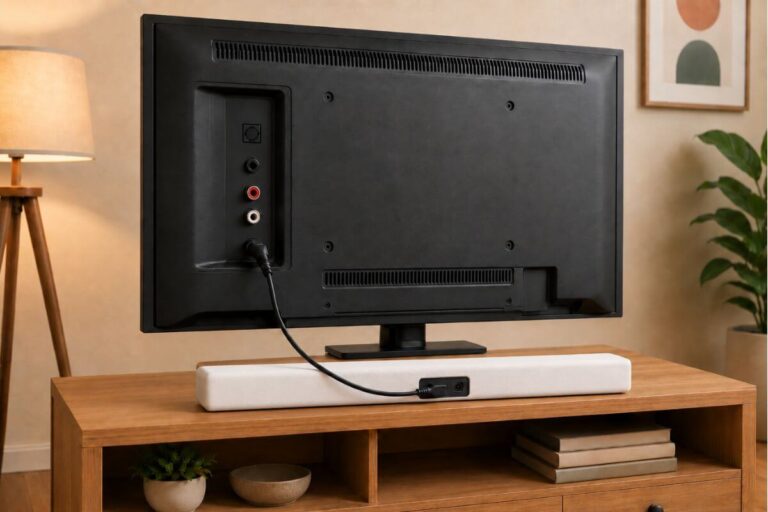
A soundbar improves dialogue by moving sound away from tiny built-in TV speakers and placing it closer to ear level. For many people, that alone makes voices easier to hear.
What a soundbar does well
- Improves overall clarity compared to TV speakers
- Makes dialogue easier to hear across the seating area, especially in front of the TV
- Reduces the need to raise the volume excessively

Important limitation to understand
Soundbars improve dialogue most for people sitting in the main listening area. Voices may sound less clear off to the sides or farther away.
What a soundbar cannot do
- Isolate voices from background music or effects
- Adjust dialogue independently for one listener
- Compensate for hearing difficulty or room echo
What TV Headphones Do Differently (and Why Voices Often Sound Clearer)
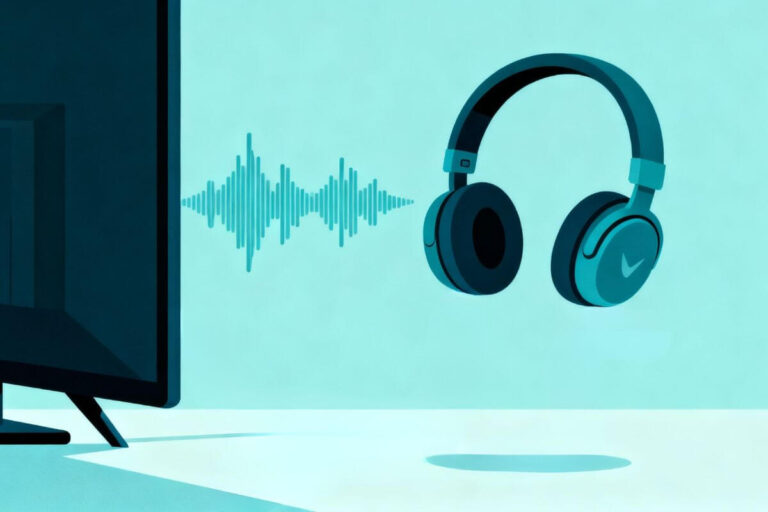
TV headphones don’t try to improve room sound. Instead, they deliver speech directly to your ears, bypassing room acoustics entirely.

This direct path often makes dialogue clearer because:
- Voices aren’t competing with room echo
- Background effects are less overwhelming
- Volume can be adjusted independently
For many people—especially those struggling to understand speech—headphones can make dialogue easier to follow because the sound is delivered directly to the listener.
Soundbar vs Headphones for TV Dialogue: A Clear Comparison
When comparing soundbar vs headphones, the difference isn’t loudness—it’s whether you’re improving sound for the room or for one listener.
Quick Decision Guide
Choose a soundbar if:
- Multiple people watch together
- Dialogue is soft but generally understandable
- You want better sound across the seating area

Choose headphones if:
- Dialogue is hard to understand even when loud
- One person needs clearer speech than others
- Personal clarity matters more than room sound
One important nuance (for mixed needs)
Some TV headphone setups let the TV speakers or soundbar keep playing at the same time as the headphones. This can help when only one person needs assistance.
However:
- Not all TVs support this
- Some setups require specific headphone bases or TV audio settings
- Dialogue clarity still comes from the headphones, not the room sound
Seniors, Hearing Difficulty, and TV Dialogue (What Actually Helps)
For many older adults, the problem with TV dialogue isn’t that it’s too quiet — it’s that voices aren’t clear enough to separate from background sound.
As hearing changes with age, it often becomes harder to pick out speech when music, effects, or room echo are present. Turning up the volume makes everything louder, but it doesn’t improve clarity.
This isn’t just about volume; changes in how the brain and auditory system process speech can make understanding dialogue harder as we age, even when sounds are audible, according to the American Speech-Language-Hearing Association.
This is where the difference between soundbars and TV headphones becomes more noticeable.
- A soundbar can make voices stronger and more forward, which helps when dialogue is soft or thin.
- Headphones reduce competing noise entirely by sending speech directly to the ears.
That’s why many seniors find that:
- A soundbar helps at first
- But headphones provide clearer, less tiring dialogue over time
This isn’t about “better technology.” It’s about how speech reaches the listener. When clarity is the main issue, direct sound usually works better than room sound.
Do You Need Both a Soundbar and Headphones?
In most homes, no.
A soundbar and TV headphones solve different problems, and using both often adds cost and complexity without much benefit.
- If the goal is better sound for everyone watching together, a soundbar is usually enough.
- If the goal is clearer dialogue for one person, headphones are usually the better choice.
Some households do use both — typically when:
- One person needs clearer dialogue
- Others prefer normal TV sound
But this only works with certain TVs and headphone setups, and it doesn’t improve clarity for the room itself. The speech clarity still comes from the headphones.
For most people deciding between soundbar vs headphones for TV dialogue, starting with one clear goal leads to better results than trying to combine solutions.
Frequently Asked Questions
Is a soundbar enough for hearing difficulty?
Sometimes, but not always. A soundbar can improve overall clarity, but it does not isolate speech. If dialogue is still hard to understand when the volume is high, headphones are often more effective.
Are TV headphones better than a soundbar for seniors?
For many seniors, yes — especially when speech clarity is the main problem. Headphones reduce background noise and deliver dialogue directly, which can make voices easier to follow.
Are TV headphones better than a soundbar for seniors?
For many seniors, yes — especially when speech clarity is the main problem. Headphones reduce background noise and deliver dialogue directly, which can make voices easier to follow.
Can you use TV headphones and still hear the TV in the room?
Some setups allow this, but not all TVs support it. Even when it works, the clearer dialogue comes from the headphones, not the room sound.
Should I try free TV settings before buying anything?
Yes. Adjusting audio settings can sometimes help. However, if dialogue remains unclear, equipment designed for speech clarity may still be needed.
What’s the simplest solution if only one person struggles to hear dialogue?
TV headphones are usually the simplest and most effective option, because they don’t require changing the room sound for everyone else.
Wrap Up
If clearer dialogue — not just louder sound — is the real goal, TV headphones are often the most direct and reliable solution.
They bypass room acoustics entirely and deliver speech straight to the listener, which is why they’re so effective when voices remain hard to understand even at higher volumes.
If you want to explore that option, see oursimple guide to TV headphones designed specifically for clear dialogue, without complicated setup or home-theater features.