Top 60s TV Shows: 15 Classic Programs You Can Stream Today
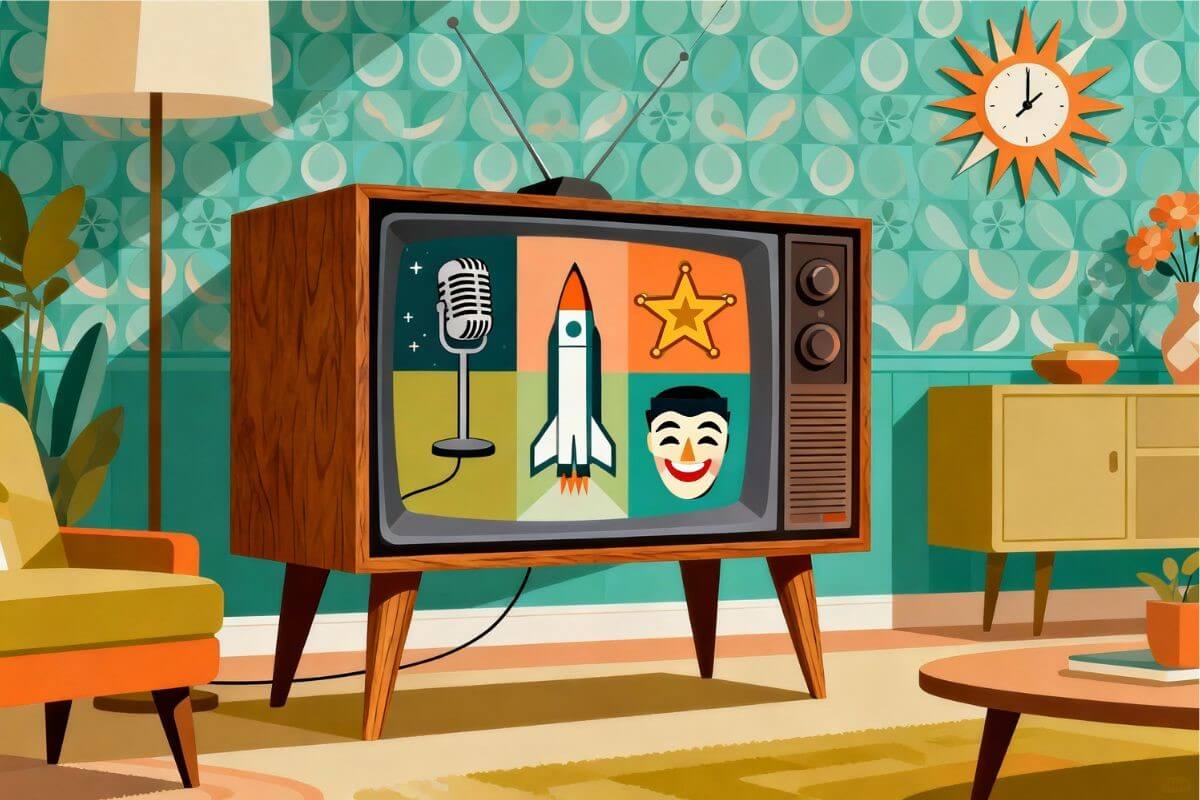
Television in the 1960s felt different from anything that came before it. Families gathered around the TV each week to watch shows that mixed comfort, humor, adventure, and creative ideas. These programs still feel warm and familiar today because they were built on solid storytelling and themes that stay meaningful.
The decade itself was full of change. The country debated civil rights, the Vietnam War, youth culture, and new technology. Color television reshaped how America saw itself, and the new medium became a companion—sometimes reflecting the world’s challenges, sometimes offering a break from them.
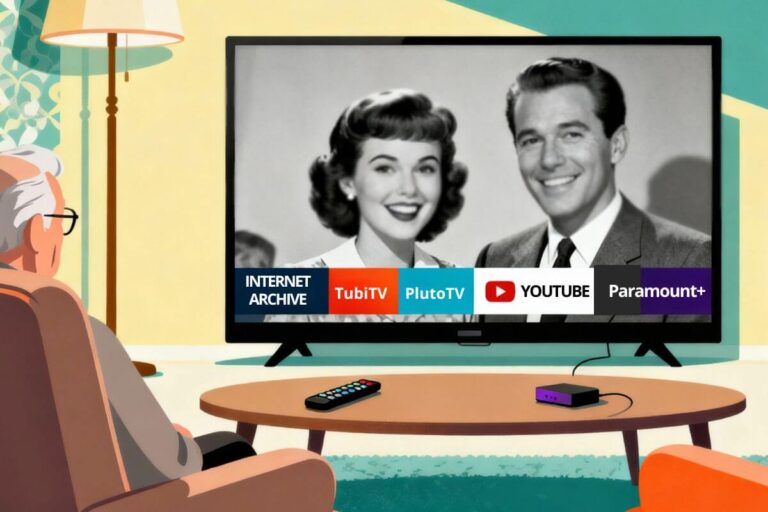
Today it’s easier than ever to revisit these classics. Free platforms like Tubi, Pluto TV, the Roku Channel, and the Internet Archive offer a large selection of classic shows and episodes—some full runs, some highlights—depending on the title.
If you want the quick “where do I watch this show?” overview (by app and device), this guide lays out the simplest free options in one place.
What are the Top 60s TV Shows?
There’s no single “official” list of the best TV shows from the 1960s, but the selections here are based on a balanced mix of fan rankings, viewership data, and critical opinion. We looked at user-generated ratings on IMDb, which reflect ongoing audience interest and nostalgia.
We also referenced historical Nielsen ratings, which show what viewers actually tuned into during the decade. In addition, we drew from retrospective reviews and critic-curated lists from sources like Rolling Stone, TV Guide, and media historians. Together, these sources help highlight the shows that not only shaped the television landscape of the 1960s but also left a lasting mark on pop culture and storytelling across generations.
Below are 15 of the most influential shows from the 1960s in no particular order—why they mattered, why they still matter now, and where you can stream each one today.

???? Many of these were huge during the 1960s (even if they began earlier), because they defined what people actually watched throughout the decade.
1. Perry Mason (1957–1966)
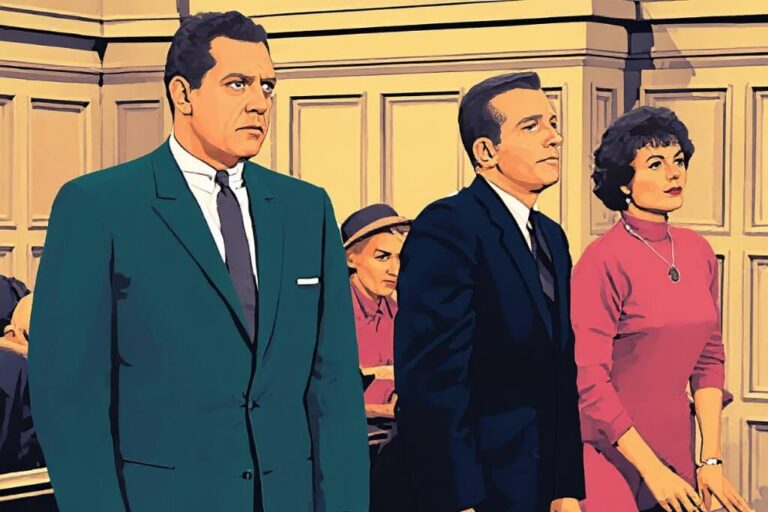
Perry Mason didn’t just attract viewers—it created the foundation for the courtroom drama. Raymond Burr played Mason with calm intelligence, guiding viewers through cases where the truth slowly revealed itself. The familiar structure—a murder, a nervous suspect, and a final courtroom twist—never lost its appeal. Because creator Erle Stanley Gardner was a lawyer, every script was checked for accuracy. Viewers respected the show’s realism. Mason became a symbol of fairness, something people appreciated during a tense decade.
Where to Stream: Pluto TV, Paramount+, Internet Archive
If you want to explore the Internet Archive without getting lost in random results, this guide shows the easiest way to browse Perry Mason and other classic TV collections.
2. The Andy Griffith Show (1960–1968)
Life in Mayberry felt calm even as the real world changed. Sheriff Andy Taylor solved problems with kindness and patience, while Barney Fife brought the kind of jittery, unforgettable humor that made families laugh together. For many of us, The Andy Griffith Show wasn’t just a sitcom — it was part of our homes.
I still remember watching it with relatives who didn’t always agree on much, yet somehow everyone went quiet when that whistled theme song started. The show made small-town life feel steady and safe, even when the country outside felt anything but.
People from many backgrounds loved the series because it spoke to fairness, decency, and the belief that most problems can be solved with honesty and heart. When I revisit it today, I’m struck by how its gentlest lessons still hold up. If you want a short list to start with, here are some of the best Andy Griffith episodes to rewatch.
Where to Stream: Pluto TV, Tubi, Paramount+
3. Star Trek (1966–1969)
Star Trek felt bold from the start. Its diverse crew and thoughtful stories explored fairness, fear, equality, and hope. Nichelle Nichols’ role as Lieutenant Uhura broke barriers and inspired generations of viewers to pursue science and technology.
Though it lasted only three seasons, Star Trek changed the future of science fiction. For those looking to explore public-domain sci-fi, resources explain how to navigate Internet Archive collections of classic TV.
Where to Stream: Paramount+, Pluto TV
4. Gilligan’s Island (1964–1967)
On the surface, Gilligan’s Island was simple slapstick comedy. But underneath the jokes was a message about equality. Seven castaways from different backgrounds—a millionaire, a professor, a movie star, and more—had to survive together. Wealth and status didn’t matter on a deserted island. Cooperation did.
Where to Stream: Tubi, Pluto TV, Paramount+
5. The Dick Van Dyke Show (1961–1966)
This show balanced bright humor with believable family life. Rob Petrie worked as a TV comedy writer, giving viewers a picture of both his home life and the creative chaos of the writers’ room. His wife, Laura Petrie, played by Mary Tyler Moore, changed how women appeared on television. She dressed in slacks at a time when wives wore dresses, spoke with confidence, and added humor equal to any man on screen. Sally Rogers, played by Rose Marie, was one of the first women in a sitcom who worked in a creative job and held her own professionally.
Where to Stream: Tubi, Pluto TV
6. Mission: Impossible (1966–1973)
Long before the film franchise, Mission: Impossible featured clever spy stories that relied on teamwork, strategy, and disguises rather than brute force. The famous opening message that “self-destructed in five seconds” became one of TV’s most iconic moments. The show reflected Cold War anxieties without being heavy-handed. Its fast pace and smart writing still feel modern today.
Where to Stream: Pluto TV, Paramount+
7. Bewitched (1964–1972)
Samantha Stephens tried to build a perfectly normal life with her mortal husband, Darrin, but her magical powers never stayed quiet for long. A nose twitch here, a stray spell there, and everyday suburban life instantly spun off in hilarious directions. The comedy came from watching Samantha juggle love, marriage, and a mother-in-law who preferred broomsticks to carpools — all while promising Darrin she’d keep the magic to a minimum. Elizabeth Montgomery’s warmth and quick wit made the chaos feel effortless, giving the show a charm that still works today.

Where to Stream: Tubi, Pluto TV, Roku Channel
8. The Beverly Hillbillies (1962–1971)
After striking oil, the Clampett family moved to Beverly Hills, setting up a steady stream of culture clashes. The jokes often came from the difference between the family’s plain, practical way of living and the complicated manners of their wealthy neighbors. People tried to “improve” the Clampetts, but those efforts usually revealed how little common sense the fancy crowd actually had.
Beneath the humor was a straightforward idea: you don’t need money or polish to have good judgment. The Clampetts stayed true to themselves, and that contrast is what kept the show memorable.
Where to Stream: Tubi, Pluto TV, Roku Channel
9. The Ed Sullivan Show (1948–1971)
A true television landmark, The Ed Sullivan Show was the ultimate variety program of its time, airing every Sunday night for over two decades. Throughout the 1960s, it introduced American audiences to an astonishing range of talent — most famously The Beatles’ 1964 U.S. debut, as well as early appearances by Elvis Presley, The Supremes, The Rolling Stones, Barbra Streisand, and comedians like George Carlin and Richard Pryor.
The show became a weekly cultural event, blending music, comedy, novelty acts, and Broadway performances for the whole family. Ed Sullivan’s stage launched careers and captured the shifting sound and spirit of the 1960s like no other program.
Where to Stream: Pluto TV, Amazon Freevee
10. The Lucy Show (1962–1968)
After her success on I Love Lucy, Lucille Ball returned to TV with The Lucy Show, bringing her trademark comedy and warmth to a new role as Lucy Carmichael — a widow raising her kids with the help of her close friend, portrayed by Vivian Vance. Vance appeared as Lucy’s best friend for the first three seasons (1962–1965), adding her own comedic timing and charm.
The series was a Top 10 Nielsen hit for much of its run, and became one of the first major sitcoms to center on a working woman balancing life, friendship, and family.
Where to Stream: Tubi, Roku Channel
11. Rowan & Martin’s Laugh-In (1968–1973)
Laugh-In captured the late ’60s perfectly. It was fast, bright, political, and full of youthful energy. Sketches moved quickly, jokes snapped back and forth, and new faces—like Goldie Hawn and Lily Tomlin—became instant stars. The show didn’t shy away from politics or cultural change. It reflected a generation that wanted to question old rules and laugh at authority.
Where to Stream: Pluto TV, Tubi
12. Gunsmoke (1955–1975)
A cornerstone of classic television, Gunsmoke follows Marshal Matt Dillon defending law and order in frontier Dodge City, Kansas. Running from September 10, 1955 to March 31, 1975, it aired for 20 seasons and 635 episodes — making it the longest‑running primetime Western in U.S. history.
Praised for its gritty realism, strong writing, and consistent cast, the show dominated Nielsen ratings from the late 1950s into the early 1960s, and remained a stalwart of television for two decades.
Where to Stream: Pluto TV, Paramount+

13. Bonanza (1959–1973)
Bonanza took place on the Ponderosa Ranch, where Ben Cartwright lived with his three sons—Adam, Hoss, and Little Joe. Each episode followed the family as they dealt with land disputes, visiting strangers, or problems in nearby Virginia City.
The show mixed outdoor action with stories about the family’s everyday challenges, using the wide Nevada setting as a steady backdrop. Its consistent cast, clear storytelling, and memorable ranch setting helped Bonanza run for well over a decade, making it one of television’s most familiar westerns.
Where to Stream: Pluto TV, Tubi
14. Candid Camera (1960–1967)
Candid Camera (as a regular TV show, 1960–1967; origins from 1948)
Often called the very first reality‑based comedy show, Candid Camera began as a radio program in 1947 called The Candid Microphone, then moved to television in 1948 under the name Candid Camera. The version that defined the 1960s aired on CBS from October 1960 through September 1967, becoming a Sunday‑night staple and consistently ranking among the top 10 shows in the Nielsen ratings.
Hosted and created by Allen Funt, the show specialized in playful, hidden‑camera pranks on everyday people. Its stunts ranged from bizarre public surprises (mailboxes that talk, cars that roll with no engine, mysteriously malfunctioning supermarket carts) to absurd social experiments that captured heartfelt, startled, or hilarious reactions.
The tagline “Smile — you’re on Candid Camera” became part of American pop culture. The show’s blend of innocence, surprise, and humor laid the groundwork for the hidden‑camera and “prank‑reaction” shows that followed.
Where to Stream: Tubi, Amazon Prime Video
15. The Tonight Show Starring Johnny Carson (1962–1992)
For 30 years, Johnny Carson ruled late-night television from behind his iconic desk, setting the standard for every host who followed. Starting in 1962, Carson transformed The Tonight Show into a national ritual — with his smooth delivery, razor-sharp monologues, and perfectly timed comic pauses.
His couch became the proving ground for future stars, launching careers for comedians like Jerry Seinfeld, David Letterman, Ellen DeGeneres, Jay Leno, and Joan Rivers, while welcoming legends like Frank Sinatra, Lucille Ball, Muhammad Ali, Barbra Streisand, and Robin Williams.
Where to Stream: Pluto TV, Roku Channel
Why DVD Box Sets Are Still the Most Reliable Way to Watch Classic 60s TV
Even though many classic shows are now available on free streaming apps, the truth is that some episodes are missing, cut, or re-edited due to music licensing, time‑compression, or network edits. This is especially common with long-running series from the 1950s and 1960s. So if you want to watch a show exactly as it originally aired, streaming isn’t always enough.
That’s why many fans still prefer complete DVD box sets, which often include every episode, fully intact, with original music and uncut scenes. For big titles like Gunsmoke: The Complete Series, Bonanza, The Dick Van Dyke Show, and Perry Mason, the DVD collections are often the most complete versions available anywhere. They never disappear from your library, require no subscription, and stay playable for decades.
For viewers who want the full, authentic versions of their favorite 60s shows — not the edited or partial catalogs found on some streaming services — DVD sets remain the most dependable option (and make great long‑term collectibles, too).
Casting From Your Phone to Your TV
If you prefer to watch from your phone, casting is easy. You can follow a guide that explains how to cast your phone to your TV, whether you’re using Roku, Firestick, a smart TV, or casting without WiFi. Many viewers use this method to play classic TV shows full episodes directly from Tubi, Pluto TV, or the Internet Archive.
Improving Audio When Watching Classic TV
Older TV shows often have uneven or low-volume sound — especially in mono recordings from the 1960s. If you’re finding it hard to hear dialogue clearly, consider using TV headphones or a Bluetooth audio adapter.
Many modern TVs support wireless headphones or external speakers, and there are helpful guides that show you how to pair your devices. Whether you’re watching Perry Mason in a quiet home or The Twilight Zone late at night, good headphones can make classic dialogue sharper, clearer, and much easier to follow — especially for viewers with hearing sensitivity.
Best Devices for Streaming Classic 60s TV Shows
Once you’ve picked a show from the list — whether it’s The Twilight Zone, The Lucy Show, or Gunsmoke — the next step is actually watching it. If you don’t already have a favorite streaming setup, a simple device like a Roku stick or Firestick can quickly turn any TV into a classic-TV machine.
Roku is a great choice for beginners. It offers easy navigation, a dedicated “Classic TV” category, and full access to free apps like Tubi, Pluto TV, and The Roku Channel — all of which carry vintage shows. If you’re just getting started, check out a beginner’s guide on how to set up a Roku stick, or compare options in a quick Roku vs. Firestick breakdown.
Firestick is another popular option — especially if you already use Amazon devices. You can stream classic shows using many of the same free apps. If your remote ever gives you trouble, a quick battery swap usually solves it.
Apple TV also supports nearly every free streaming app and has a clean, intuitive interface. Whether you’re watching Laugh-In on Pluto TV or Perry Mason on Freevee, these devices make it easy to enjoy full episodes on your TV instead of your phone.
If you’re using a Smart TV and want more simple app options beyond the big names, here are easy streaming apps that work well on most Smart TVs.
Frequently Asked Questions
Which is better for classic TV, Roku or Firestick?
Roku is simpler to navigate, while Fire Stick works well for Amazon users. If you want a side-by-side breakdown of menus, remotes, voice search, and ease of use, this Roku vs Firestick comparison makes the differences clear.
What are the best classic shows to start with?
Perry Mason, The Ed Sullivan Show, Gunsmoke, and The Andy Griffith Show are excellent choices. You can also explore classic options highlighted through vintage television on YouTube.
Wrap Up
The top TV shows of the 1960s remain important because they mix humor, heart, and imagination in a way few modern series can match. They came from a decade full of change, yet the stories stayed warm, simple, and honest.
The diverse casts, bold ideas, and playful styles that began in the ’60s grew into the variety shows, game shows, and ensemble sitcoms that defined the next decade.
Whether you’re looking for comfort, clever writing, or a familiar moment from the past, the top ’60s shows are always within reach—and they still shine just as brightly today. If you’re ready to revisit these classics, don’t miss our Where to Watch Old Shows guide—it’s the perfect companion to help you find and stream your favorites anytime.